
Roof damage after Santa Ana winds often goes unnoticed until the first real rain. The winds are dry, so a loose tile or lifted flashing can sit quietly for weeks before water finds it.
In San Diego, Santa Ana conditions are most common from fall into winter, often overlapping with the start of the rainy season. That timing makes right now a smart moment to look for problems.
This guide covers the roof problems that most often show up after Santa Ana season, what you can safely check yourself, and when a professional inspection makes sense.
Quick take: Santa Ana winds write the damage. The first winter storm reads it out loud. Finding problems between those two moments is what saves the ceiling.
Three Homeowners Who Should Look Up This Season
Wind affects neighborhoods differently, so your risk depends partly on where and how you live.
- The inland foothill homeowner. You live near Escondido or along exposed ridgelines and canyons where gusts tend to funnel. Tiles, ridge caps, and vents take the hardest hits.
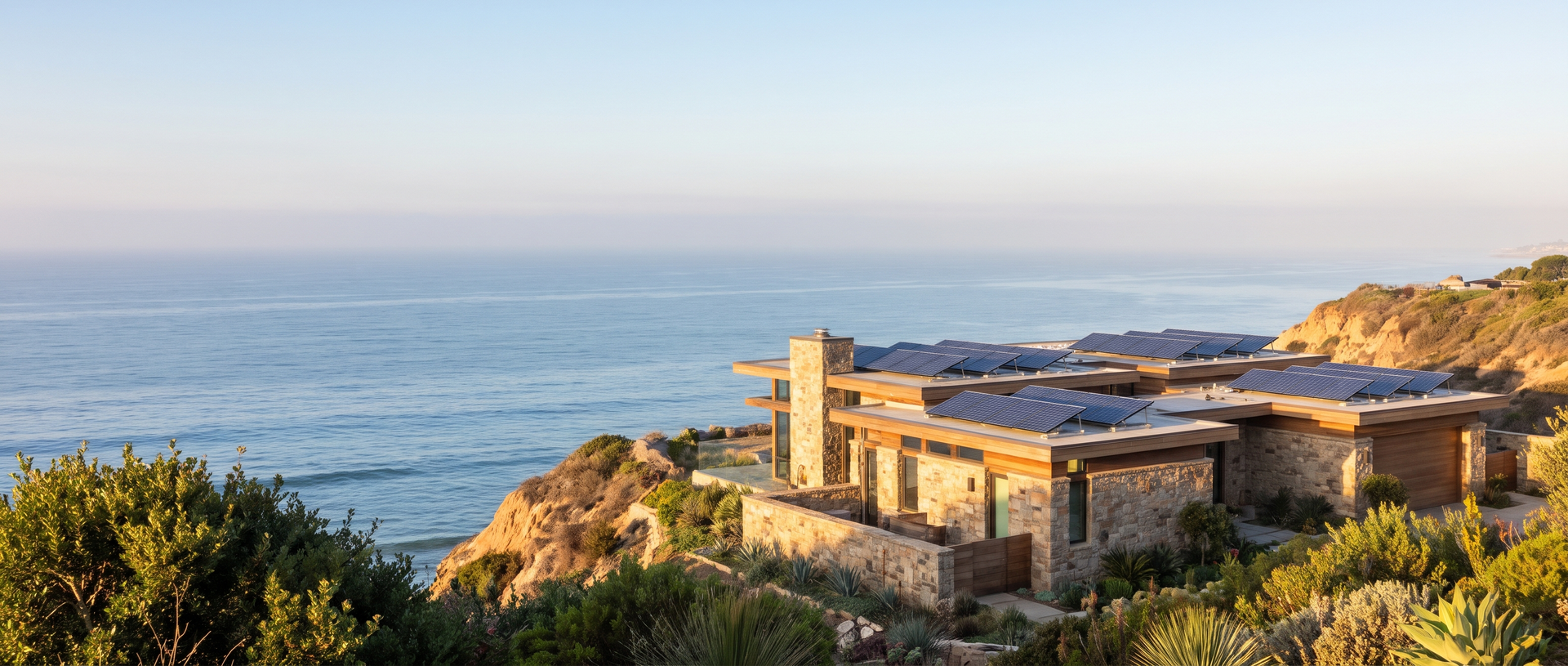
- The coastal homeowner who feels safe. Winds are usually milder near Oceanside, but gusts still loosen aging materials. Salt air can also weaken fasteners and flashing over time.
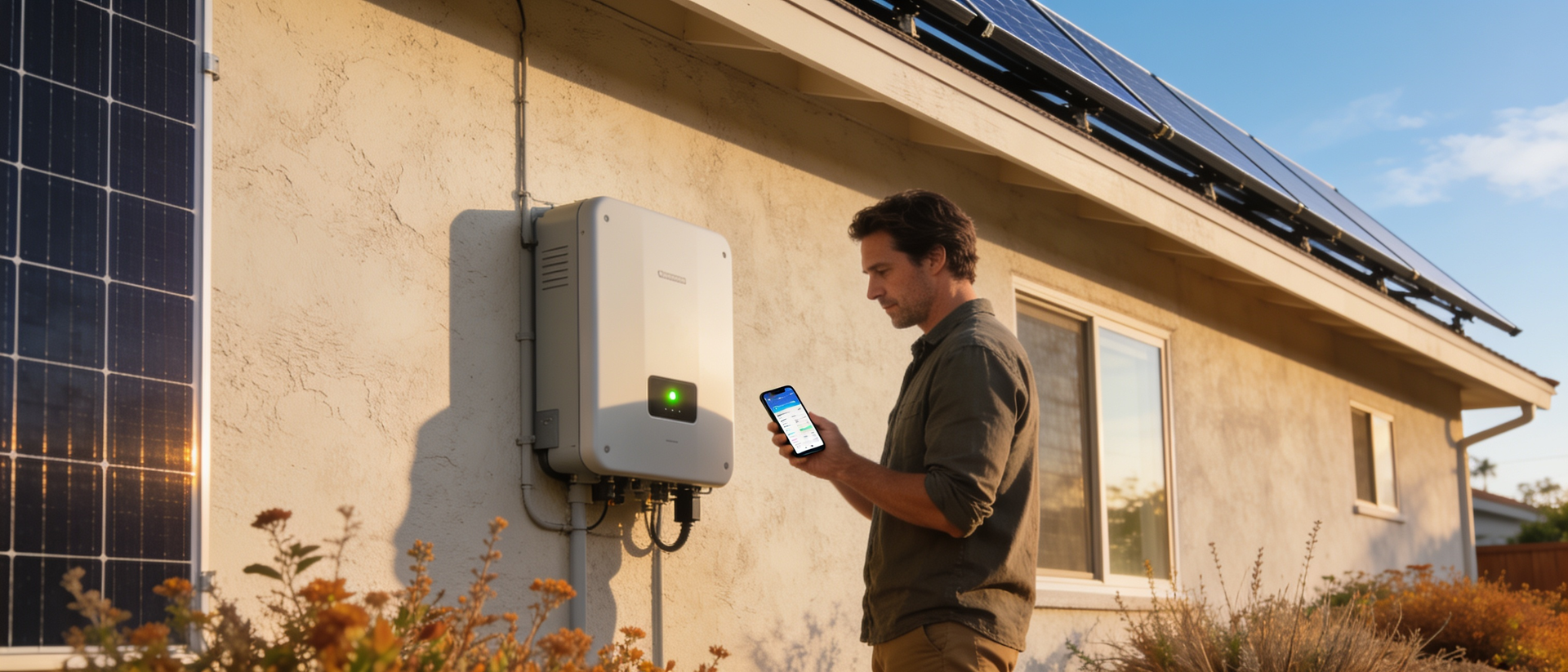
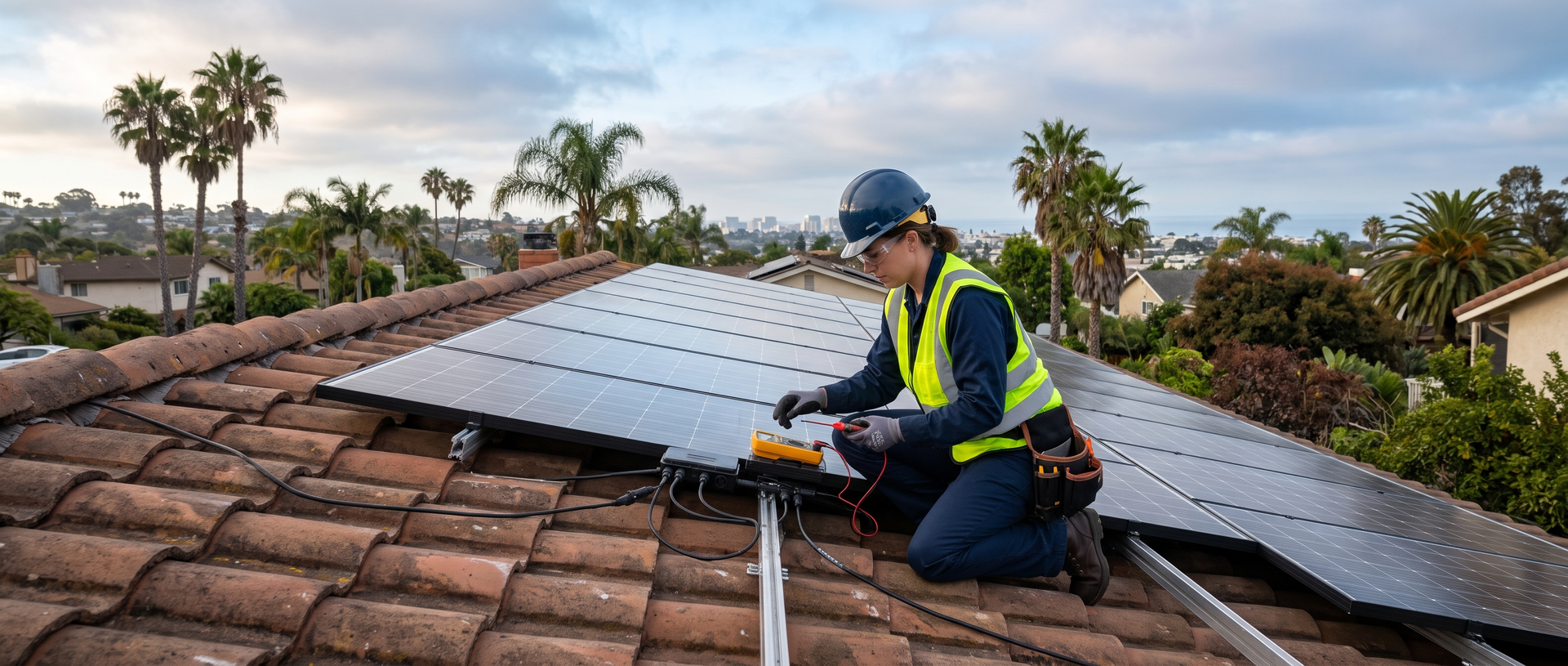
- The solar homeowner. You have panels on your roof in Chula Vista or nearby. Debris can collect beneath the array, and mounting points deserve a look along with the roof itself.
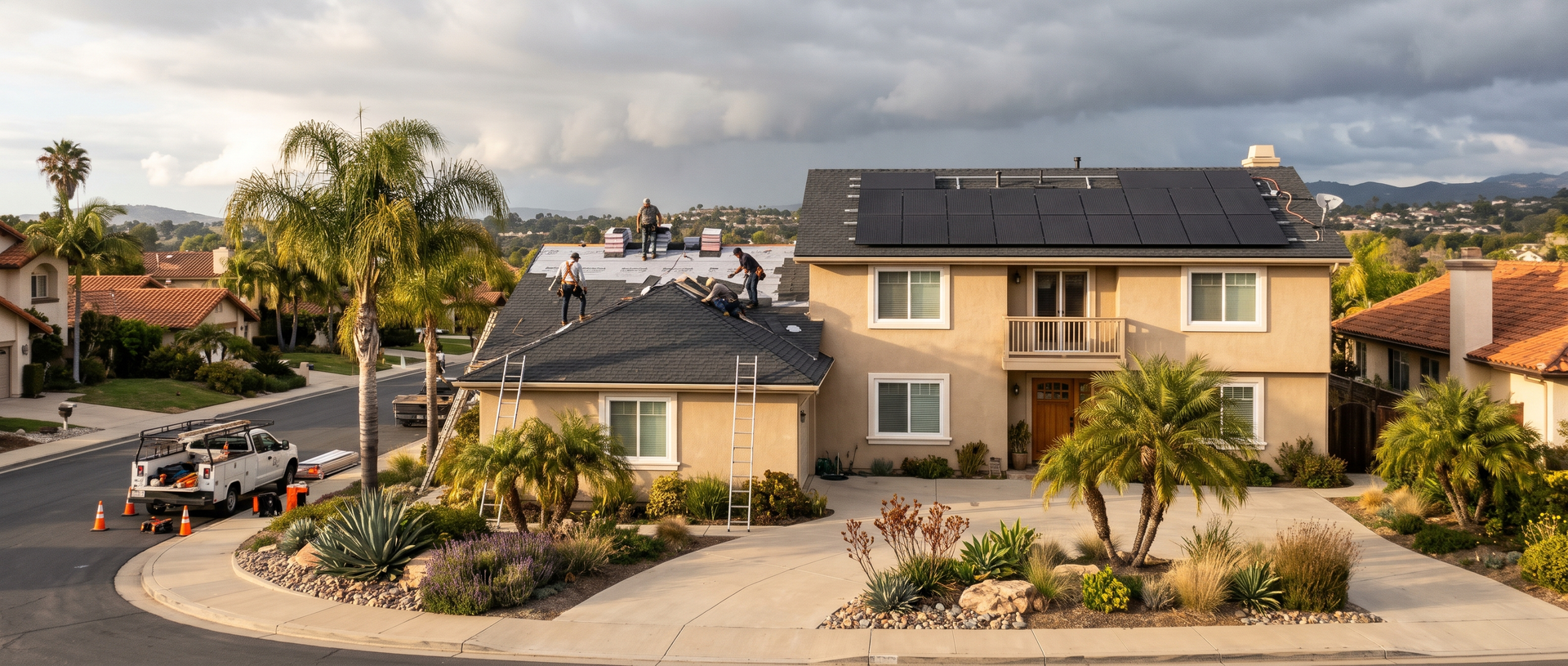
You might be someone who has not been on a ladder in years, and that is fine. Sunline Energy's roofing and solar teams work in-house, which helps when roof and panel concerns overlap.
This matters most for homeowners who cannot remember their roof's last inspection.
Common Roof Damage After Santa Ana Winds, and What to Do Next
Some wind damage is obvious from the yard. Other problems hide in gutters, valleys, and around roof penetrations.
| If You Notice | Consider This | Why It Fits |
|---|---|---|
| Broken tile pieces or shingle debris in the yard | Schedule a roof inspection before rain | Missing pieces can expose underlayment |
| Gutters or valleys packed with leaves and fronds | Have debris cleared safely | Blocked drainage pushes water under roofing |
| Lifted flashing near vents, chimneys, or skylights | Request a professional repair | Flashing gaps are common leak points |
| Dust or debris built up on solar panels | Follow cleaning guidance or request service | Buildup can reduce solar output |
Not sure which row fits? Photos help. The Sunline Energy support page is a simple place to share what you are seeing.
This helps homeowners decide what can wait and what should be handled before the next storm.
Why Roof Damage After Santa Ana Winds Waits for the Rain
Santa Anas are hot, dry, and gusty, so they rarely cause leaks on their own. They loosen, crack, and shift materials, then leave the damage waiting.
Here's the thing: a cracked concrete tile can look perfectly normal from the street. The underlayment beneath it does much of the waterproofing work, and once exposed to sun and wind, it can wear faster.
Debris left on a roof during fire weather is also fuel. Dry leaves in gutters and under solar arrays are worth clearing before the next wind event, not after.
A Safe Ground-Level Roof Check
- Walk your property and look for tile pieces, shingle granules, or roofing debris.
- Use binoculars to scan ridges, edges, and areas around vents.
- Check that gutters and downspouts are clear and draining.
- After the first rain, look for ceiling stains or damp spots inside.
- Photograph anything unusual and keep the dates for your records.
Please stay off the roof. Tile roofs break easily underfoot, and roofs with solar panels add electrical and fall hazards.
This benefits homeowners who want answers without taking unnecessary risks.
Keeping a Wind-Tested Roof Reliable for the Long Run
Wind damage is rarely a one-time event in Southern California. The goal is a roof that handles each season without drama.
Right after an inspection: small repairs like reset tiles and resealed flashing get handled before the rain. A few seasons later: you know which areas of your roof need attention after strong winds. Over the long term: if your roof eventually needs major work under solar panels, planning removal and reinstallation together avoids extra coordination.
Homeowners comparing roofers often notice that the handoff between roofing and solar is where projects get complicated. When one team understands both, communication tends to be simpler. Happy with the result? The Sunline Energy referral program lets you share it.
This matters for owners who want their roof and solar system to age well together.
Common Questions About Roof Damage After Santa Ana Winds in San Diego
What roof damage is most common after Santa Ana winds?
The most common roof damage after Santa Ana winds includes cracked or shifted tiles, lifted shingles, loosened ridge caps, and bent or lifted flashing. Gutters and roof valleys also fill with debris, which can redirect rainwater under roofing materials once winter storms arrive.
Should I get my roof inspected after Santa Ana season?
Yes, an inspection after Santa Ana season is a smart step, especially before the rainy months. Wind damage often stays hidden until water finds it. Homes near exposed canyons and inland areas like Escondido tend to see more wind stress than sheltered neighborhoods.
Can Santa Ana winds damage solar panels on my roof?
Santa Ana winds can affect rooftop solar, mostly through debris buildup, dust on panels, and stress around mounting points. Properly installed systems are designed with wind in mind, but a visual check after strong gusts helps confirm panels, wiring, and roof seals remain secure.
Does homeowners insurance cover roof damage from Santa Ana winds?
Coverage depends on your specific policy and how the damage occurred. Many policies treat sudden wind damage differently from gradual wear. Photograph damage with dates, document it before making permanent repairs, and contact your insurer directly to confirm what applies to you.
Get Ahead of Roof Damage Before the Rain
Roof damage after Santa Ana winds is easiest to fix before water gets involved. If you have spotted debris, broken tiles, or lifted flashing, a timely inspection keeps a small repair from becoming an interior one.
Even if everything looks fine, a clear picture of your roof brings real peace of mind for the rainy season. You can request a free roofing quote or explore Sunline Energy's roofing and solar services.
Ready to Check Your Roof Before the Rain?
Talk with Sunline Energy about a roof review designed around your home and solar setup.