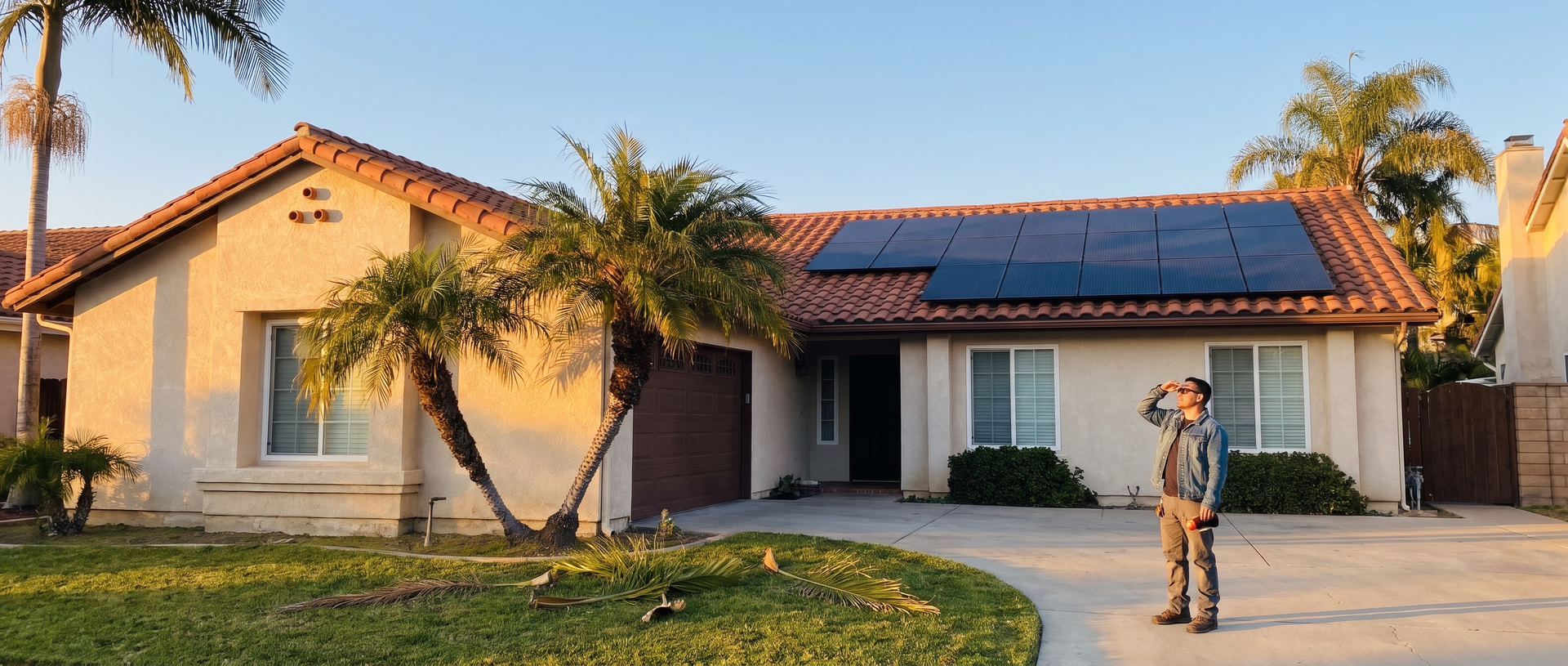

If you want to protect solar panels from salt air in Del Mar, start by picturing your car after a month parked near the beach. That faint crust on the trim is the same film settling on your roof.
Salt air rarely causes sudden failure. The real enemy is moisture plus time.
The good news is that a few smart decisions, made early and revisited regularly, go a long way. Here is what coastal homeowners should know.
How Much Salt Exposure Does Your Home Really Get?
Exposure in Del Mar varies more than people expect. A few blocks can change your maintenance needs.
- The Bluff-Top Home. You might be someone with an ocean view and direct breezes off the water. Salt spray reaches your roof most days, so equipment choices and inspections matter most.
- The Few-Blocks-Inland Home. You are east of Camino Del Mar or near the San Dieguito Lagoon. Exposure is real but milder, so a steady care routine usually covers it.
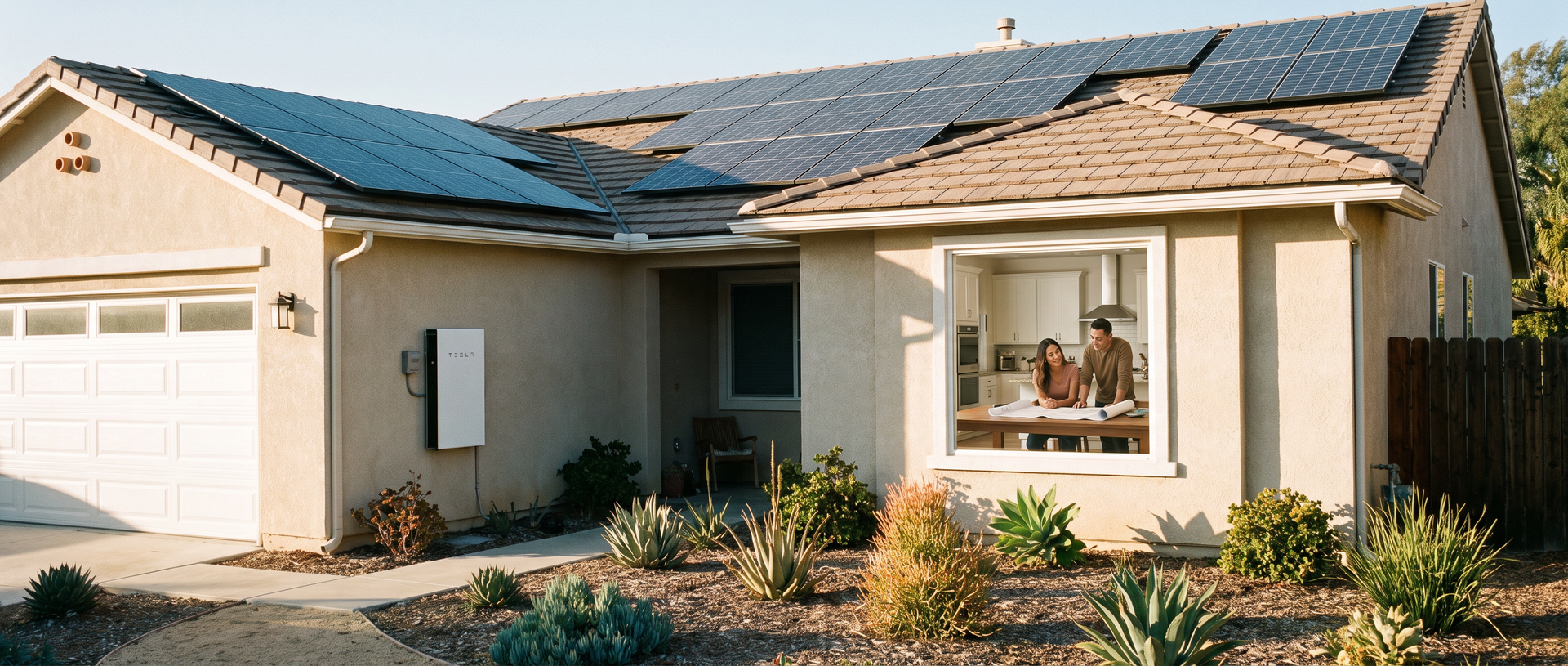
- The Planner. You are designing a new system and can choose materials and placement from scratch. This is the best moment to plan for the coast.
Picture a weekend morning on your deck. You wipe the railing, notice a fine white residue, and glance up at the roof. That moment of curiosity is the right instinct. It is far easier to protect equipment than to replace it.
Owners in Oceanside and coastal Chula Vista face similar conditions, while Escondido homes see far less salt. Our in-house engineering team considers exposure during system design.
This matters for homeowners who want protection matched to their actual location.
Matching Exposure to the Right Protection
Protection works best in layers: what you install, where you put it, and how you care for it.
{TABLE}If you already own a system, a few observations help any technician:
- Photos of any white film, rust spots, or discoloration on frames and conduit.
- Where your inverter and any battery are mounted, and whether they face the ocean.
- Your system's age and the equipment brands listed in your paperwork.
Notice the theme. Prevention through design does more than cleaning ever will.
You can explore how solar, batteries, and roofing come together at Sunline Energy.
What Coastal Protection Looks Like Day to Day
Del Mar's marine layer keeps surfaces damp in the morning. Then come long dry stretches with little rain to rinse anything away. Salt builds up, absorbs moisture, and sits on metal.
Here's what tends to help most:
- Choose corrosion-resistant materials. Ask about racking finishes, stainless fasteners, and sealed connectors rated for coastal use.
- Ask about salt mist testing. Some panel manufacturers test modules to salt mist standards such as IEC 61701. Ask which equipment in your proposal has been tested.
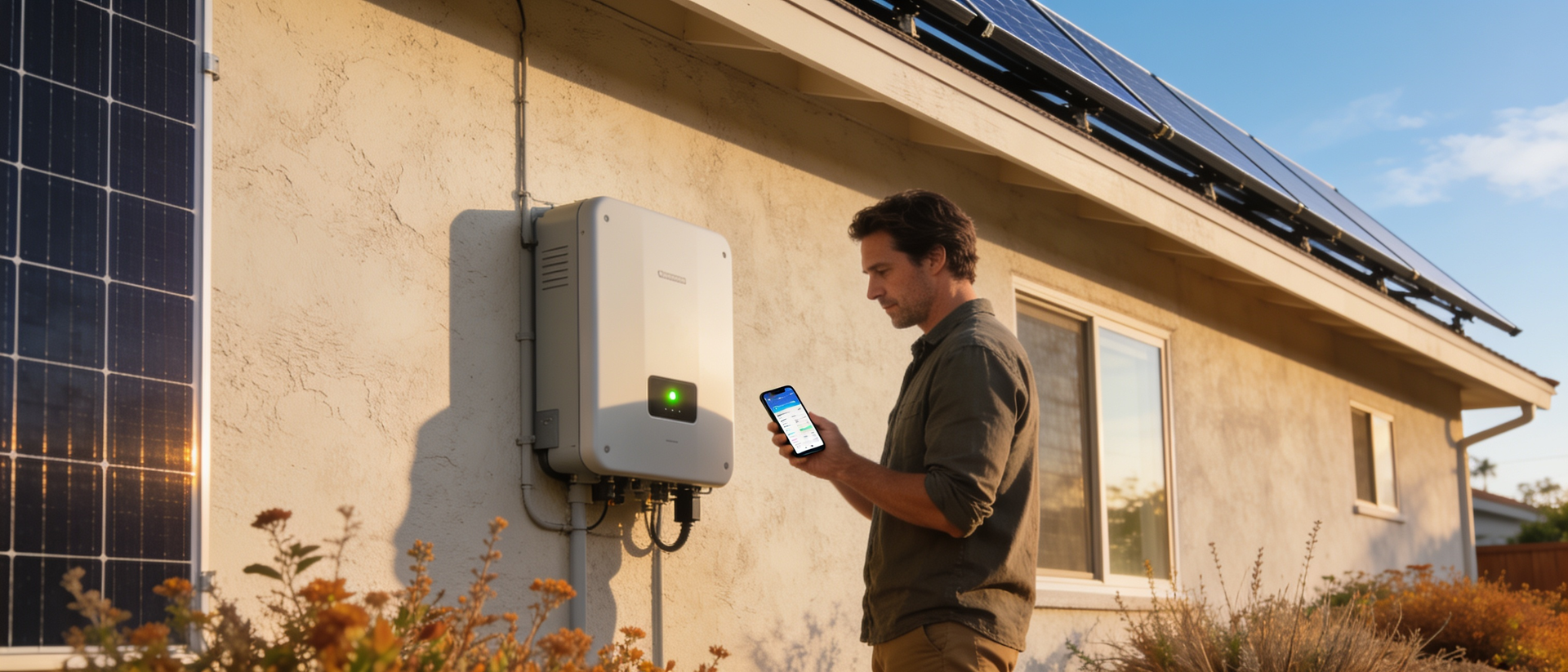
- Place electronics thoughtfully. Inverters and batteries often do better in a garage or a sheltered wall away from direct ocean wind.
- Rinse gently, from the ground. Follow the manufacturer's cleaning guidance. Skip pressure washers and harsh chemicals, and never climb onto the roof.
A white film on panel frames is a sign to schedule an inspection, not a reason to panic.
Ownership Reality: Warranties, Inspections, and Year Five
Read your warranty with the coast in mind. Some manufacturer warranties include conditions for installations near salt water, so verify the terms before you buy or before you file a claim.
Coastal owners usually find that corrosion starts in quiet places. Think of the underside of rails, the base of conduit, or a connector tucked beneath a panel edge. None of it is visible from the yard.
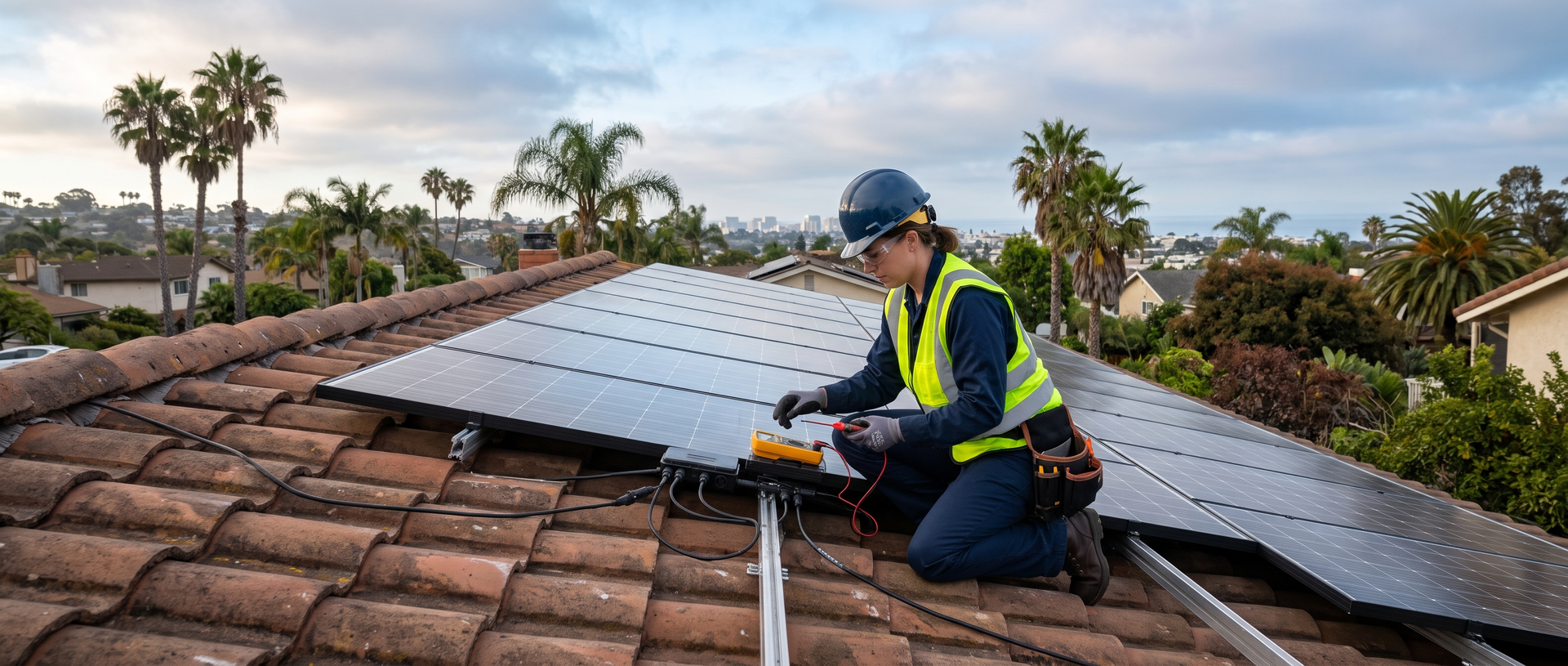
Periodic inspections catch what you cannot see from the yard. A technician can check grounding, conduit, junction boxes, and mounting hardware for early corrosion.
Homeowners who plan for the coast from the start often realize their maintenance routine stays simple. Those who retrofit later can still get there. It just takes a closer first look.
Month one, the system looks brand new. By year five, a well-planned coastal system still looks cared for, because small issues got caught early. Our support team can help you set an inspection rhythm that fits your exposure.
Key takeaway: Coastal durability comes from the right materials, smart placement, and steady inspections, in that order.
Common Questions About Salt Air and Solar in Del Mar
{FAQ}Coastal Living, Without the Corrosion Worry
You can protect solar panels from salt air in Del Mar without turning maintenance into a hobby. If you are planning a system, design for the coast. If you already own one, inspect it on a steady schedule and rinse gently.
Have coastal neighbors with the same question? Share our referral program with them. And if you spot corrosion or want a second look, contact Sunline Energy anytime.
Ready to Coast-Proof Your Solar System?
Talk with Sunline Energy about equipment, placement, and care designed for your Del Mar home and its exposure.