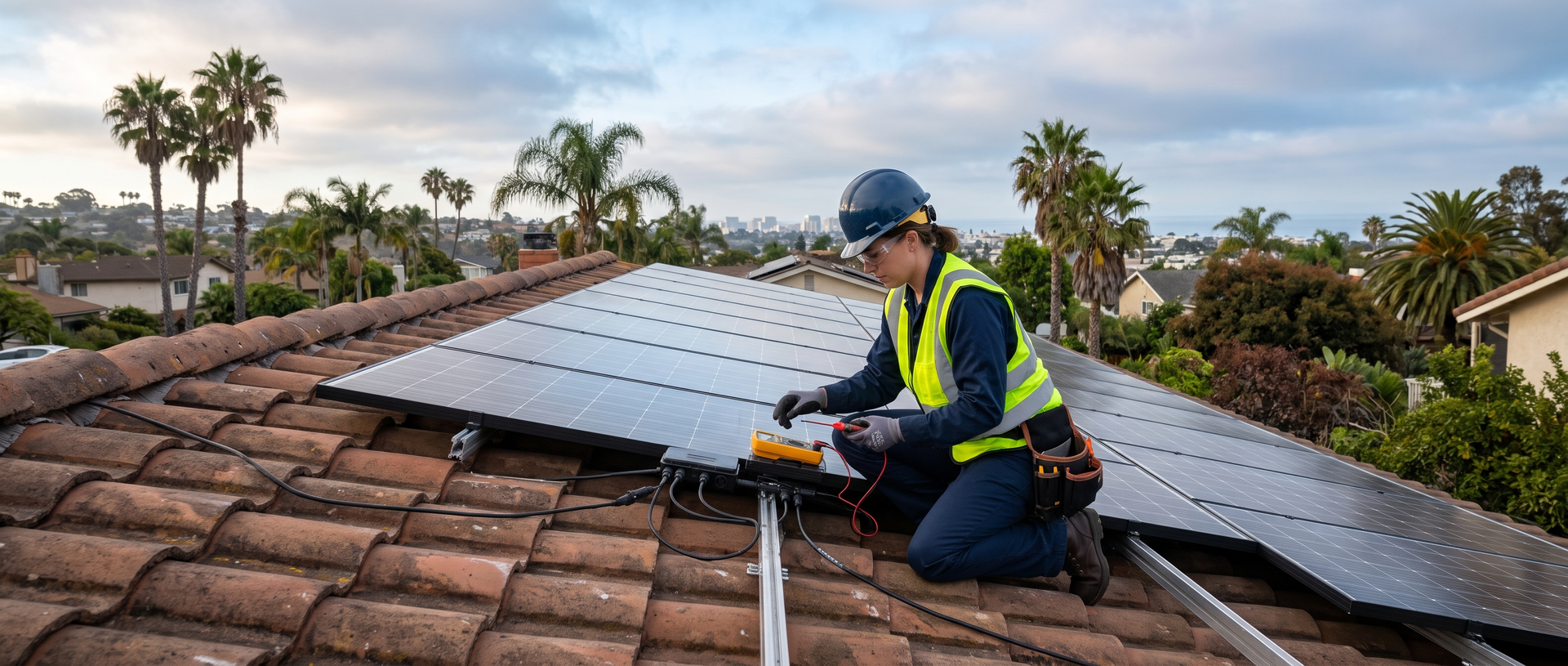

Solar inverter service is one of those tasks most homeowners put off until something obviously breaks. The trouble is that winter makes problems harder to notice, not easier.
In San Diego, shorter days and a lower sun naturally reduce production from late fall through winter. That seasonal dip can hide an inverter that is quietly underperforming, faulting, or dropping offline.
This guide walks through the warning signs, a quick self-check you can do from the ground, and when it makes sense to call for a professional look before the rainy months.
Quick take: Your inverter is the translator of your solar system. Panels make DC power, and the inverter turns it into the AC power your home uses. When the translator struggles, the whole system goes quiet, even on a sunny day.
Which Kind of Solar Owner Are You This Winter?
Most homeowners fall into one of three patterns. Each one tends to miss different warning signs.
- The app checker. You open your monitoring app often and notice dips quickly. Your risk is mistaking a real fault for normal seasonal change.
- The set-and-forget owner. Your system has run quietly for years, and you have not looked at the inverter since installation day. A problem could have started months ago.
- The inherited-system owner. You bought a home in Chula Vista or Escondido that came with panels, but no records, logins, or service history. You may not know what normal looks like yet.
You might be someone who sees yourself in more than one group. That is common, and it is a good reason to establish a clear baseline before winter. Sunline Energy brings in-house engineering, solar, and electrical experience to that kind of review.
This matters most for owners who cannot say with confidence what their system produced last December.
Signs Your Solar Inverter Needs Service, Matched to a Next Step
Not every alert means something is broken. The table below pairs what you might notice with a reasonable next step.
| If You're Noticing | Consider This | Why It Fits |
|---|---|---|
| A red or amber light, or an error code | Photograph the code and request a service check | Codes help a technician narrow the cause faster |
| Monitoring shows zero or offline | Check your home Wi-Fi first, then schedule a look | Lost connection and lost production need different fixes |
| Output well below the same month last year | Compare month to month, then request an inspection | A gradual seasonal dip is normal; a sharp drop is not |
| Buzzing, a burning smell, or unusual heat | Keep away and contact support promptly | Possible electrical faults are a safety issue first |
If you already know something is off, the Sunline Energy support page is the fastest place to start. A photo of the inverter display and a screenshot of your monitoring data help the conversation move quickly.
This helps owners who want to describe the problem clearly instead of guessing.
Why Winter Hides Inverter Problems
Here's the thing: a healthy system and a struggling one can look similar in December. Both produce less than they did in June, so the difference only shows up when you compare carefully.
Local conditions add their own wrinkles. Fall Santa Ana winds can leave a film of dust on panels, which lowers output and muddies the picture. Inverters mounted in hot inland garages may have spent the summer working harder, while coastal homes near Oceanside deal with salt air around outdoor equipment and connections.
The first winter storms are often when moisture finds a weak connection or conduit seal. Catching that before the rain is simpler than diagnosing it after.
A Five-Minute Self-Check From the Ground
- Open your monitoring app and confirm the system is reporting today.
- Look at the inverter's status light or screen without opening any covers.
- Compare this month's production to the same month last year, if you have that data.
- Photograph any error codes, warning lights, or visibly damaged wiring.
- Note any new sounds, smells, or heat near the equipment.
Never open an inverter enclosure or disconnect wiring yourself. Inverters can hold dangerous voltage even when the system appears to be off.
This benefits homeowners who want peace of mind without climbing ladders or guessing at electrical work.
What Inverter Ownership Looks Like Over Time
Inverters work hard every sunny day, and they often need attention sooner than the panels they serve. That is simply how the equipment ages.
Month one after a check: you have a clear baseline and know what normal winter output looks like for your home.
Year three: monitoring alerts actually mean something to you, so small issues get handled before they turn into weeks of missed production.
Later years: you can plan for repair or replacement on your schedule rather than after a surprise shutdown. Coverage and warranty terms vary by manufacturer and installer, so keep your system documents somewhere easy to find.
Owners who feel well supported often end up recommending their installer to neighbors. If that sounds like you, the Sunline Energy referral program is worth a look.
This matters for homeowners who see solar as a long-term investment, not a one-time purchase.
Common Questions About Solar Inverter Service in San Diego
How do I know if my solar inverter needs service?
Your solar inverter likely needs service if it shows a red or amber light, displays an error code, stops reporting to your monitoring app, or produces far less than the same month last year. Unusual buzzing, heat, or burning smells call for prompt professional attention.
Is lower solar production in winter normal in San Diego?
Yes, some drop in winter production is normal in San Diego because days are shorter and the sun sits lower in the sky. A gradual dip is expected. A sudden, sharp drop, or a system reporting zero on a clear day, is worth having checked.
Can I reset my solar inverter myself?
Only if your inverter's manual describes a specific shutdown and restart procedure, and only by following it exactly. Never open the enclosure or touch wiring. If the same fault returns after a restart, that is a clear sign the system needs a professional service visit.
How often should I check my solar inverter?
A quick monthly look at your monitoring app catches most problems early, and a professional check makes sense whenever alerts appear or before a seasonal change like winter. Manufacturer recommendations vary, so review your system documents for any specific inverter maintenance guidance.
Solar Inverter Service Before Winter: The Bottom Line
A little attention now means fewer surprises when the rain arrives. If your inverter is showing warnings, going offline, or underperforming, scheduling solar inverter service before winter keeps small issues small.
If everything looks healthy, you head into the season with a clear baseline and real confidence in your system. Either way, you can request a free quote from Sunline Energy or learn more about Sunline Energy's solar, battery, and roofing services.
Ready to Check Your Inverter Before Winter?
Talk with Sunline Energy about a review designed around your system and energy goals.