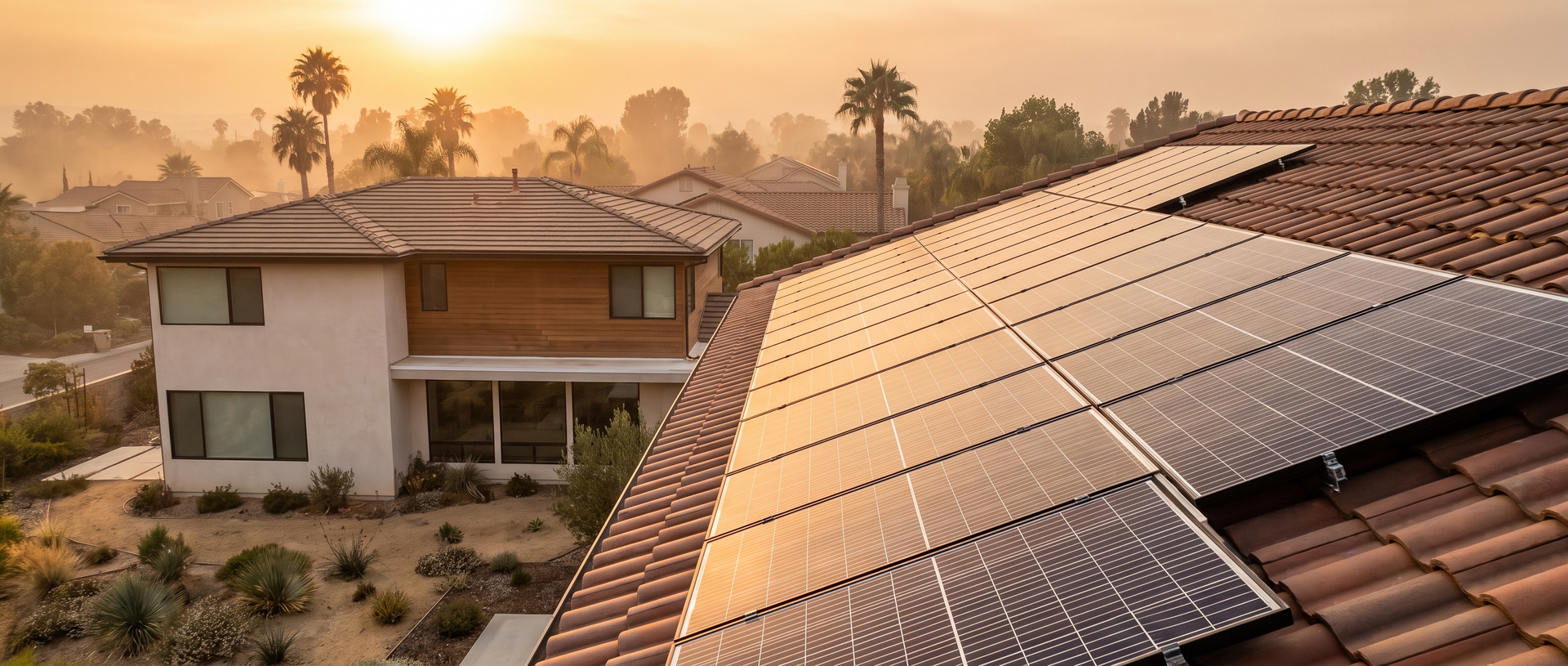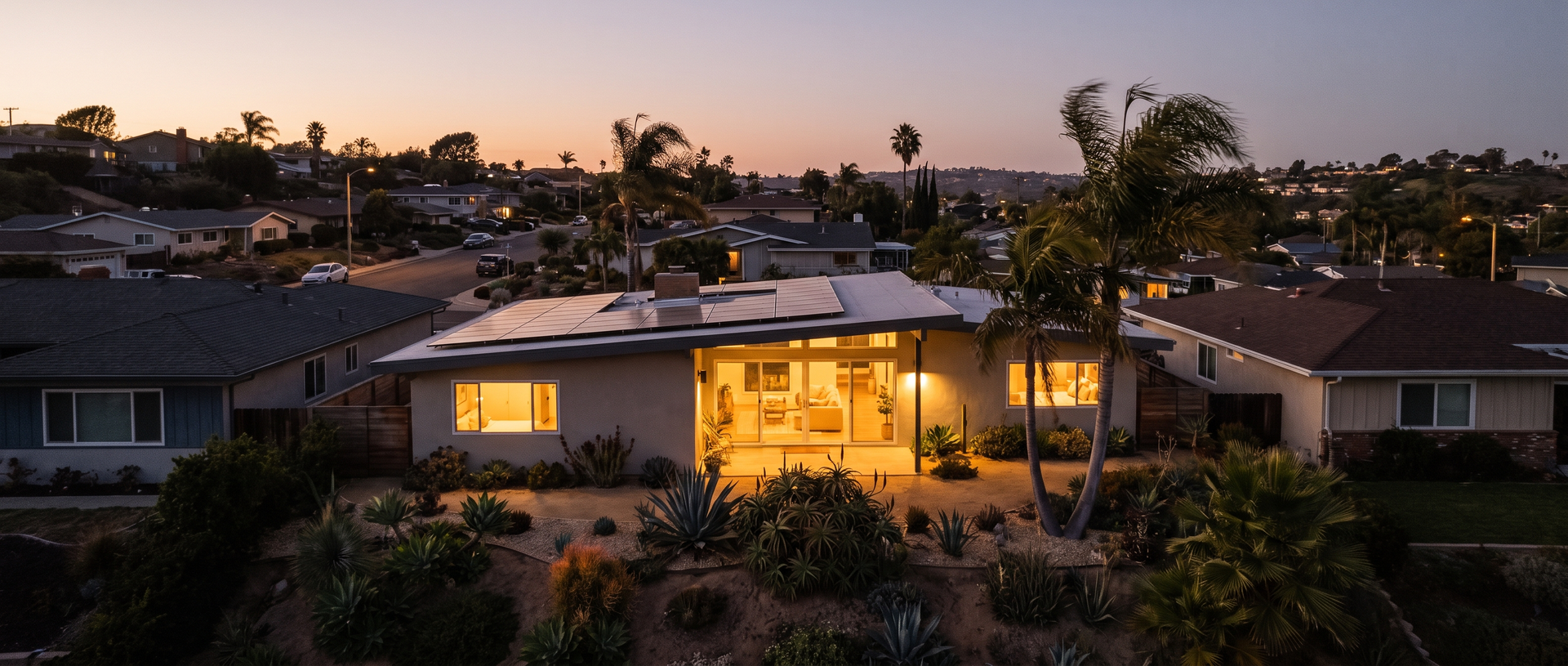

Can solar and battery backup during PSPS events keep your home running? Yes, when the system is designed for outages. Across San Diego County, SDG&E may turn off power in high-risk areas when Santa Ana winds and dry conditions raise wildfire danger.
Those Public Safety Power Shutoffs can last more than a day. Here's what actually stays on, what doesn't, and how to plan a backup system that fits your household.
Three Homeowners, One Question
Think of battery backup as a lifeboat, not a second ship. It isn't meant to replicate everything the grid does. It's sized to keep what matters afloat until the power comes back.
Which lifeboat you need depends on who you are. You might be someone who:
- Lives in the foothills. Homes out along I-8 toward Alpine or up SR-67 in Ramona see shutoff notices more often. You're planning for multi-day events, not a quick blip.
- Lives closer to the coast. In Oceanside or Chula Vista, shutoffs are less frequent, but outages still happen. You mainly want the fridge, Wi-Fi, and lights covered.
- Already owns solar. Maybe you're in Escondido and just learned your panels go dark with the grid. You want to make the system you have more useful.
Each profile leads to a different design. That's why Sunline Energy starts with engineering and your actual needs, which you can read more about on our About Sunline Energy page.
This matters for homeowners who want a plan built around their real risk, not a generic package.
Matching Solar and Battery Backup to Your PSPS Plan
Most homeowners fall into one of a few patterns. This table is a starting point for a conversation, not a final design.
| If You're This Homeowner | Consider This | Why It Fits |
|---|---|---|
| You need essentials only | Critical-loads backup | Stored energy goes to the fridge, lights, and outlets you rely on, so it lasts longer |
| You want the whole house available | Whole-home backup with more storage | Every circuit can run, with smart load management to protect your reserve |
| You already have solar | Add a compatible battery | Your existing panels can recharge the battery during daylight in an outage |
| You rely on medical equipment | Dedicated protected circuits | Life-safety devices stay powered first, before anything else |
Notice what isn't in the table: a single right answer. The goal is a system that behaves predictably when a shutoff notice arrives. You can explore all of our solar, battery, roofing, and electrical services on the Sunline Energy home page.
This helps households that want to self-select before talking specifics.
What Really Happens When the Grid Goes Dark
Here's the part that surprises people. Solar panels on their own shut off during a grid outage. It's a required safety feature called anti-islanding, and it protects utility crews working on lines they expect to be dead.
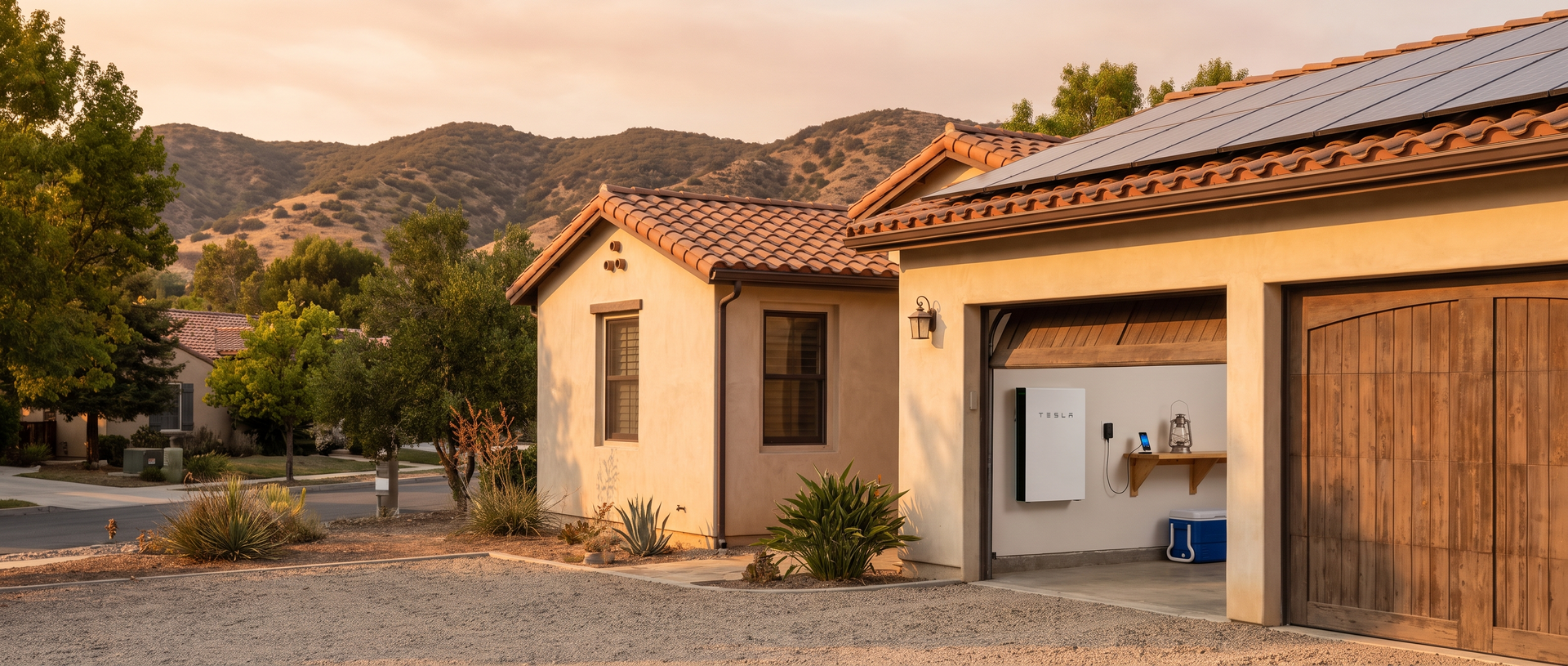
A battery changes that. When the grid drops, the system disconnects your home from the utility and switches to stored power, usually so quickly you barely notice. During daylight, your panels keep producing and recharge the battery instead of feeding the grid.
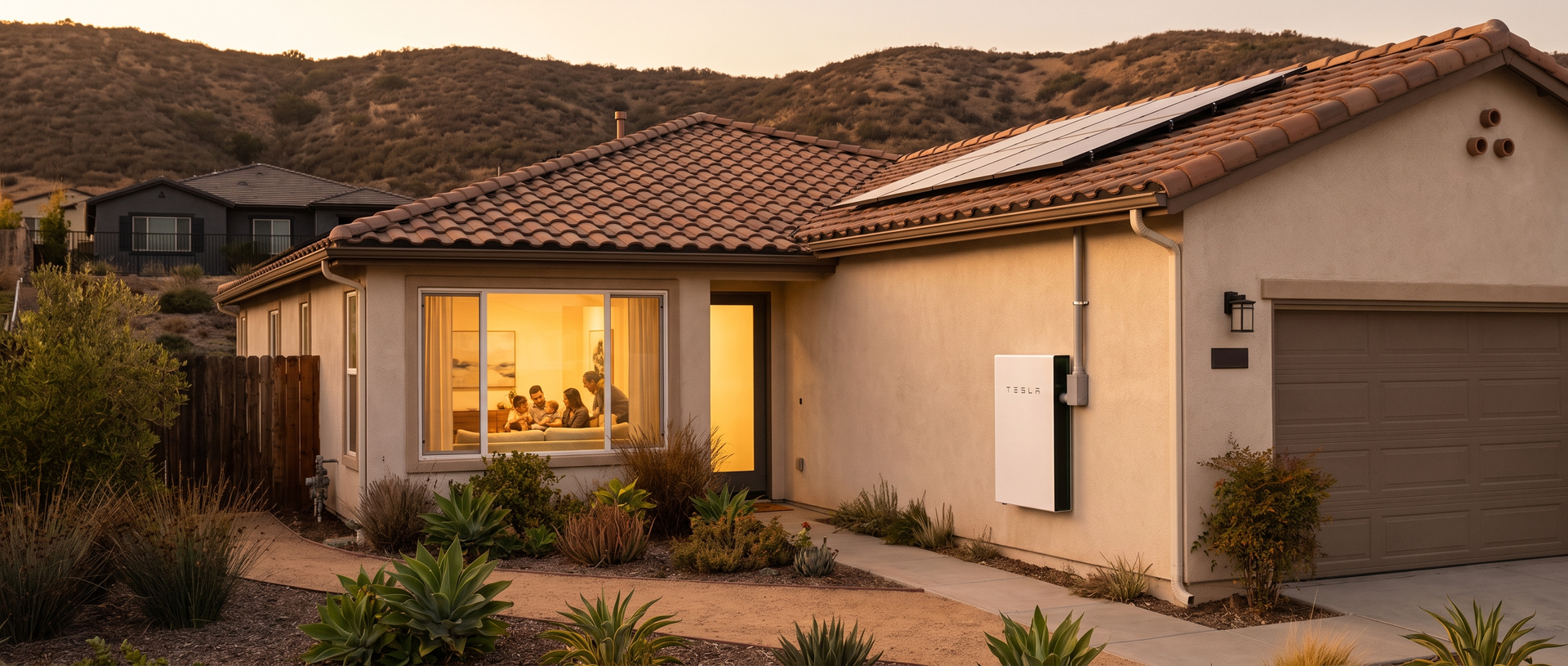
Picture it. You're driving home on SR-67 under a Red Flag Warning, and your phone buzzes with a shutoff notice. You walk in that evening and the fridge is humming, the router is blinking, and the kids are finishing homework under normal lights.
Is it unlimited power? No. But it's calm.
Key takeaway: What you back up matters as much as battery size. Central air conditioning, pool pumps, and EV charging can drain stored energy fast, and smoky or hazy days can reduce how much your panels recharge.
This matters most for families who want the evening routine to stay intact.
Living With a Backup System, Month One and Beyond
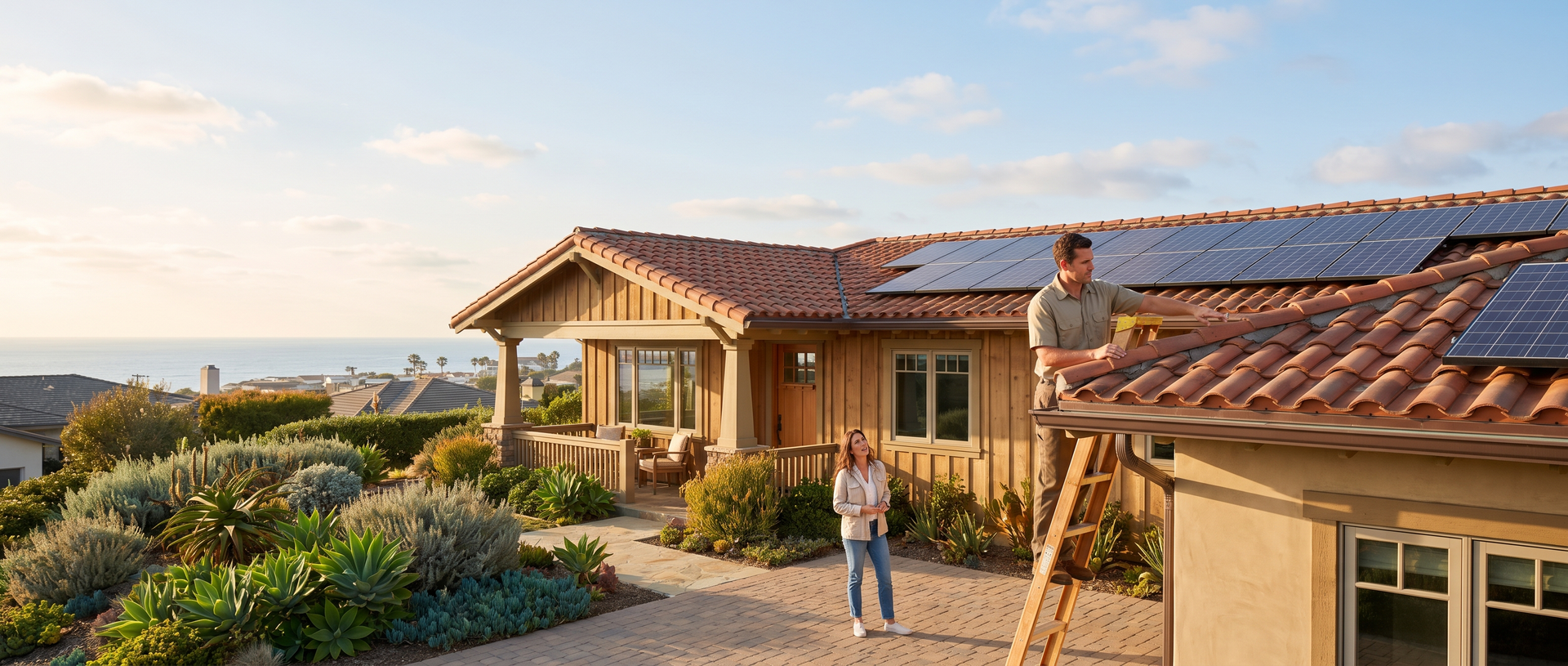
Before anything is installed, a good plan looks at your roof, your electrical panel, and how you use energy. Because Sunline Energy handles roofing, solar, and electrical work in-house, those pieces are planned together rather than stitched together later.
- Design and permitting. Your system is engineered, permitted, and inspected by the local jurisdiction.
- Utility interconnection. SDG&E reviews the system and grants permission to operate before it runs connected to the grid.
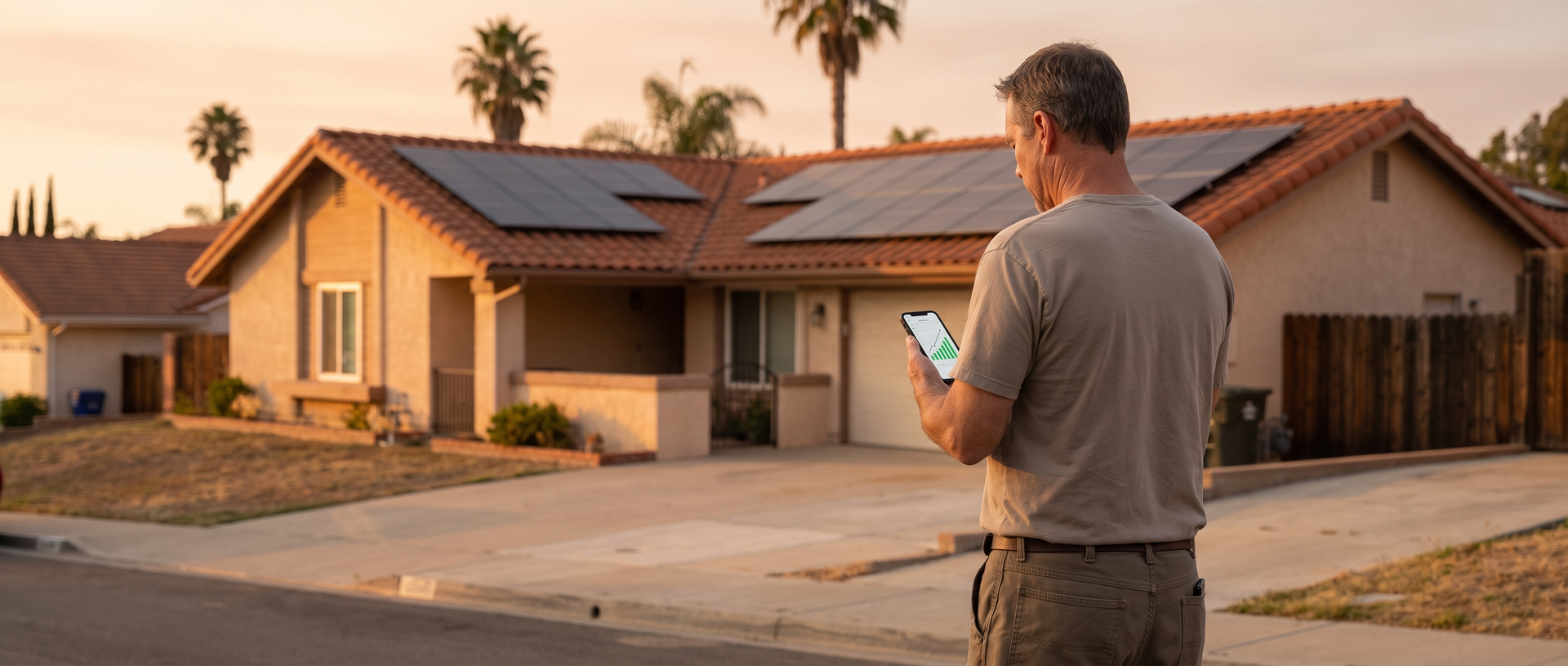
- Month one. You learn the monitoring app and set a backup reserve that makes sense for fire season.
- Year one and beyond. You test the system before Santa Ana season, keep software current, and call for service when something looks off.
Battery incentives such as California's Self-Generation Incentive Program may be available to some homeowners. Eligibility and program details change, so verify current rules before counting on any incentive.
When questions come up after installation, our Sunline Energy support team is there to help keep your system ready.
This helps homeowners who want long-term confidence, not just a good first week.
Common Questions About Solar and Battery Backup During PSPS in San Diego
Will my solar panels work during a PSPS shutoff?
Not on their own. Grid-tied solar shuts off during outages for utility worker safety. With a properly configured battery, your system can separate from the grid and keep powering selected circuits, while panels recharge the battery during daylight hours, even in backcountry areas like Alpine or Ramona.
How long can a home battery run my house during a PSPS event?
It depends on battery capacity, what you back up, and how much sun reaches your panels. Running only essentials stretches stored energy much further than running central air or an EV charger. A site-specific design gives you a realistic picture for your Escondido or Chula Vista home.
Can I add battery backup to the solar system I already have?
Often, yes. Many existing solar systems can be paired with a compatible battery, though inverter type, electrical panel capacity, and roof condition all matter. An evaluation confirms compatibility and whether any upgrades are needed before your system can provide backup power during the next shutoff.
Is solar and battery backup a good alternative to a generator for PSPS?
For many homeowners, it is. A battery system runs quietly, needs no fuel runs, and switches over automatically. Generators can support heavy loads for longer stretches, so some households use both. Your outage history, essential loads, and comfort needs in areas like Oceanside should guide the decision.
Your Next Shutoff Can Feel Different
Solar and battery backup during PSPS events won't make the grid irrelevant, but it can make a shutoff feel manageable. If your priority is keeping essentials running, a focused design delivers that. If you want more of the house available, planning ahead makes it possible.
Either way, the payoff is peace of mind when the wind picks up. Have a neighbor thinking about the same thing? Our referral program makes it easy to share. And if you'd like to talk it through first, contact Sunline Energy anytime.
Ready to Plan Your Backup Power?
Talk with Sunline Energy about a solar and battery system designed around your property, your essential loads, and your shutoff risk.