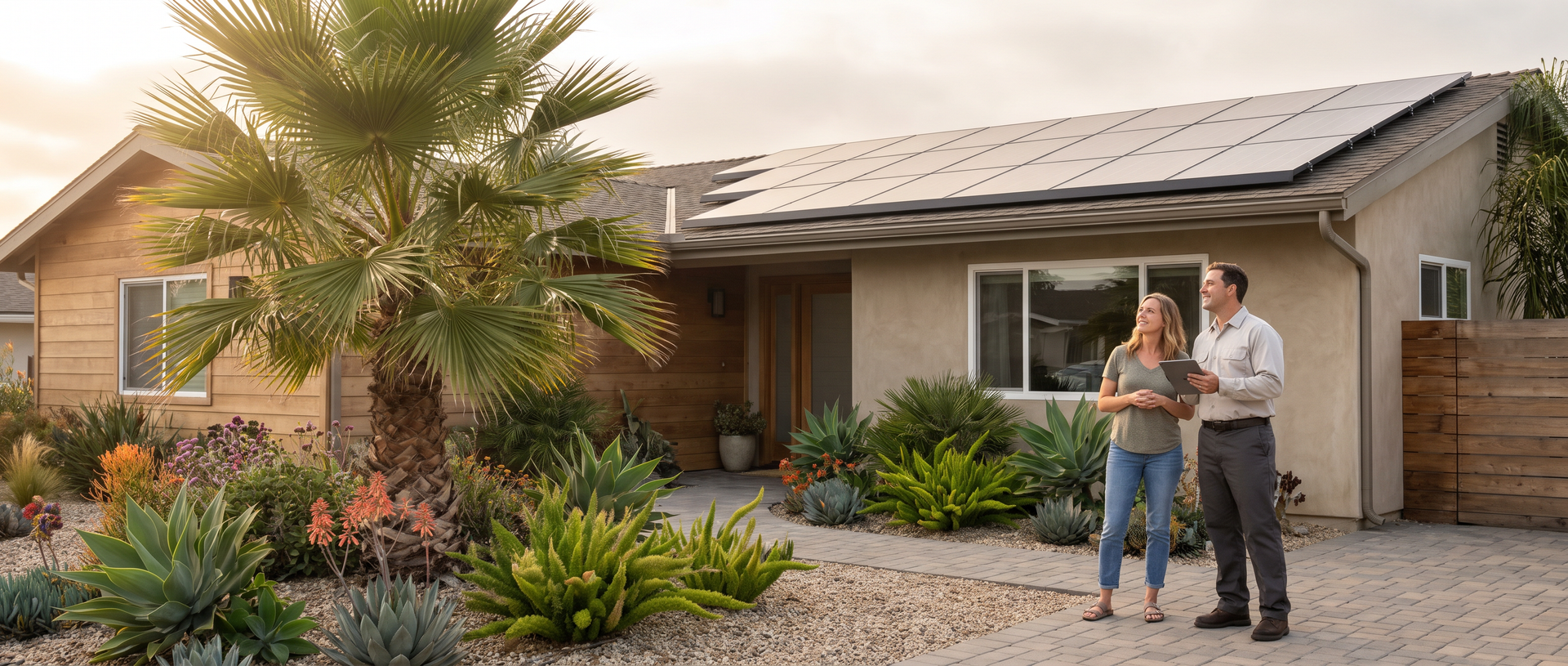
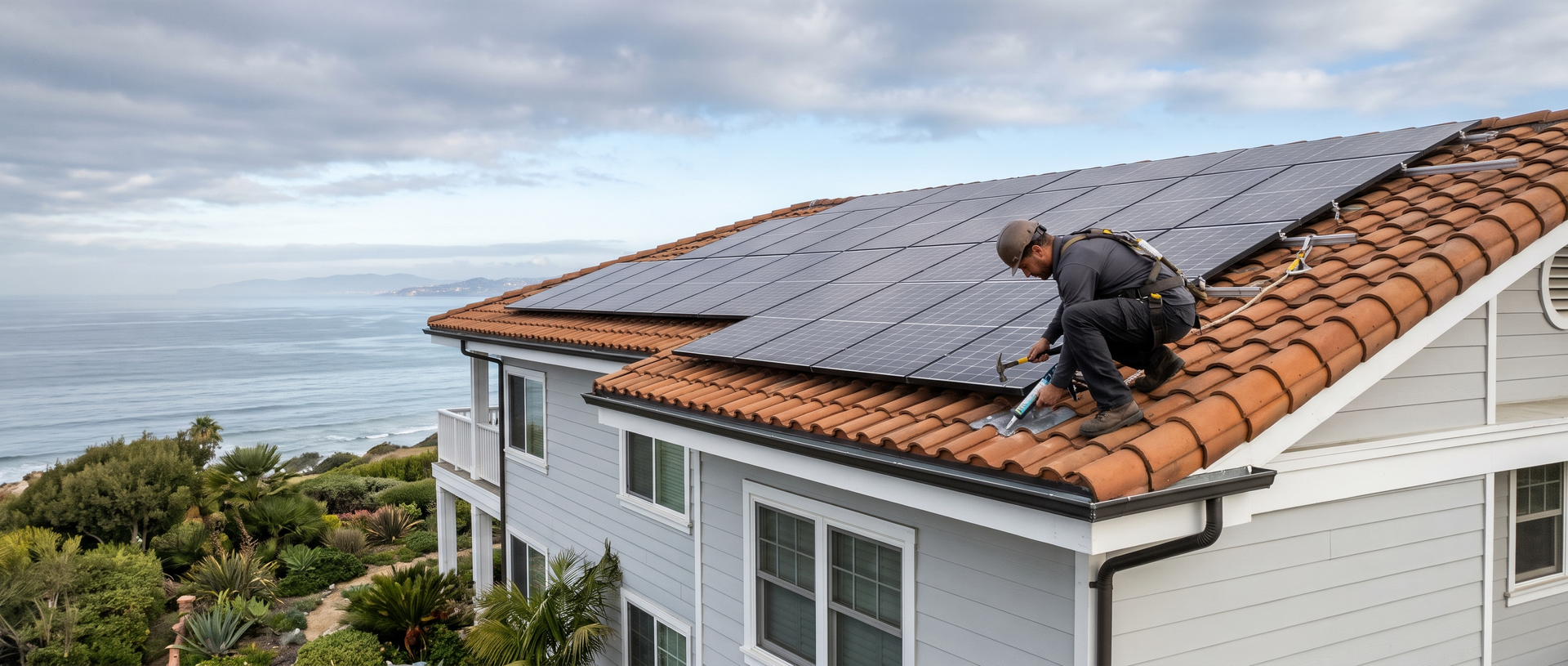
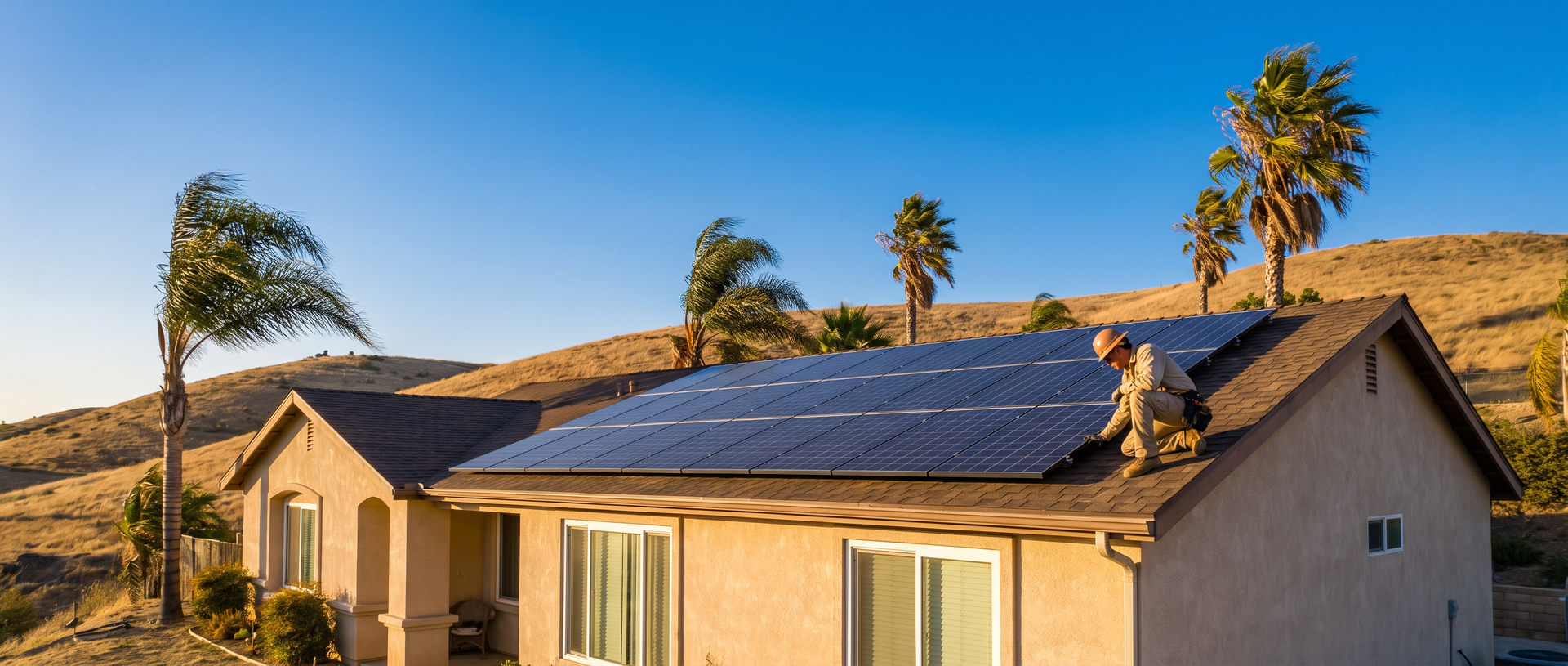
Is your roof ready for solar in San Diego, or does it need attention before the December rains arrive? That deserves a clear answer before you commit to a system.
A small flashing problem is easy to ignore in dry weather. It gets much harder to ignore after a storm.
This guide helps you read your roof's condition, sort what can wait, and decide what comes first.
Key takeaway: A good solar roof does not have to be new. It should be structurally sound, free of active leaks, and have enough useful life left to support a long-term system.
Which of These Three Roof Stories Sounds Like Yours?
Most homeowners fit one of three stories. You may recognize yours before anyone climbs a ladder.
- The quiet roof. You might be in Chula Vista with no leaks, no missing pieces, and no recent storm damage. You want confirmation, not a sales pitch.
- The patched roof. You might own an Oceanside home with an old repair, a faint ceiling stain, or wear around metal flashing. Solar may still fit, but those spots need a closer look.
- The last-chapter roof. You might have an Escondido home with a roof already nearing replacement. Installing panels now could mean removing them sooner than you'd like.
Here's the honest take: that third story isn't bad news. It simply means roofing and solar should be planned as one conversation, which is why it helps to work with a team with in-house roofing, solar, and electrical capabilities.
Knowing your story helps you walk into an inspection with better questions.
Roof Ready for Solar in San Diego? Match Your Situation to a Next Step
You don't need to solve everything at once. You only need the right first move.
| If You're This Homeowner | Consider This | Why It Fits |
|---|---|---|
| No leaks and no visible damage | A roof and solar assessment | Confirms the fit before design begins |
| Old repair or a ceiling stain | Find and fix the source first | Keeps a hidden problem from sitting under panels |
| Roof nearing replacement | Plan roofing and solar together | Lowers the odds of removing panels soon after install |
| Unsure of the roof's age or history | A documented inspection | Replaces guesswork with clear choices |
A useful assessment looks past the surface. Ask about the roof structure, attic signs, shade, usable roof area, and your home's energy use.
If you're not sure which row fits, contact Sunline Energy and describe what you're seeing. That clarity is what takes the pressure off the decision.
What December Rain Reveals That a Sunny Day Can't
Long dry stretches are comfortable, but they can hide things. Rain rarely creates a roof problem out of nowhere. It usually exposes one that was already there.
Local conditions matter too. Salt air near I-5 in Oceanside can be tough on exposed metal, while homes farther inland along SR-78 deal with more heat and sun. Before the next storm, look for:
- Cracked, slipped, or missing tiles or shingles
- Worn flashing around vents, chimneys, and roof edges
- Gutters and valleys clogged with leaves or debris
- Attic stains, damp insulation, or a musty smell
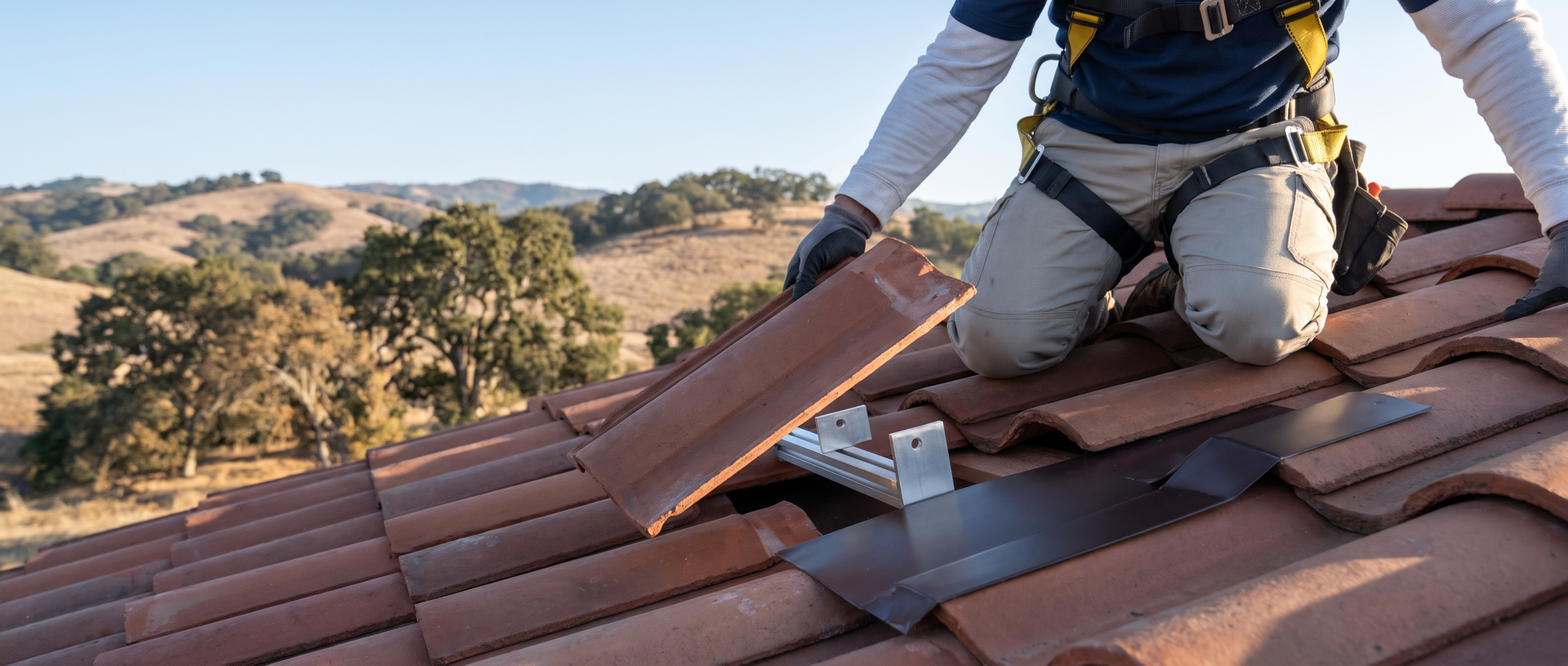
Tile roofs deserve special attention. Much of the water protection sits in the underlayment below the tile, and you can't judge that from the driveway. It isn't the exciting part of going solar, but it may be the most important.
Check what you can from the ground and from inside the attic, then leave roof walking to a professional. Please stay off a wet roof.
What Happens After Your Roof Gets a Yes
A solid roof opens the door, but a good project still needs careful follow-through. Most of the worry fades when you can picture the path ahead.
- Early in the project: Your design is matched to the roof and your energy use. Permitting, inspections, and SDG&E interconnection then need to be completed before the system can operate.
- Your first rainy season: Keep an eye on ceilings and the attic, and report anything unusual promptly.
- Year three and beyond: Roof repairs may eventually involve the array, so it helps to know who to call. Sunline Energy's support team is a good place to start.
Not every project can be finished before the first December storm, and that's okay. Knowing your roof's condition and stopping any active leak are the priorities.
Also, don't build your budget around old assumptions. The federal residential clean energy credit ended for homeowner systems installed after 2025, and utility programs can change, so verify what currently applies to your property.
Common Questions About Getting a Roof Ready for Solar in San Diego
How do I know if my roof is ready for solar in San Diego?
Your roof is likely a candidate if it is structurally sound, free of active leaks, and has enough useful life left for a long-term system. A hands-on inspection should confirm this, especially on older tile or shingle roofs near Escondido or the coast.
Should I replace my roof before installing solar panels?
Replace it first if an inspection shows it is nearing the end of its useful life. Coordinating both projects can reduce the chance of removing panels soon after installation. If real life remains, targeted repairs may be enough for a Chula Vista or nearby home.
Can a leaking roof be ready for solar panels?
Not until the source of the leak is found and repaired. A ceiling stain can appear far from where water actually enters, so panels should wait until the cause is clear. Once an Oceanside or inland home's repair is confirmed, your roof can be reassessed.
Does rain mean my roof isn't ready for solar in San Diego?
No, rain does not make a sound roof unsuitable for solar. Wet weather can affect scheduling and safe roof access, though, so ask about timing early. A homeowner in North County, for example, could get an assessment now and install when conditions allow.
Getting Your Roof Ready for Solar in San Diego With Confidence
A roof ready for solar in San Diego isn't necessarily a new roof. It's one you understand. If yours is sound, you can move forward with confidence. If it needs work, you'll know what to fix first, and the December forecast will feel far less stressful.
Explore Sunline Energy's solar, roofing, and battery services when you're ready. If a neighbor is weighing the same decision, our referral program is worth sharing.
Ready to Take the Next Step?
Talk with Sunline Energy about your roof's condition and a solar plan designed around your property and energy goals.