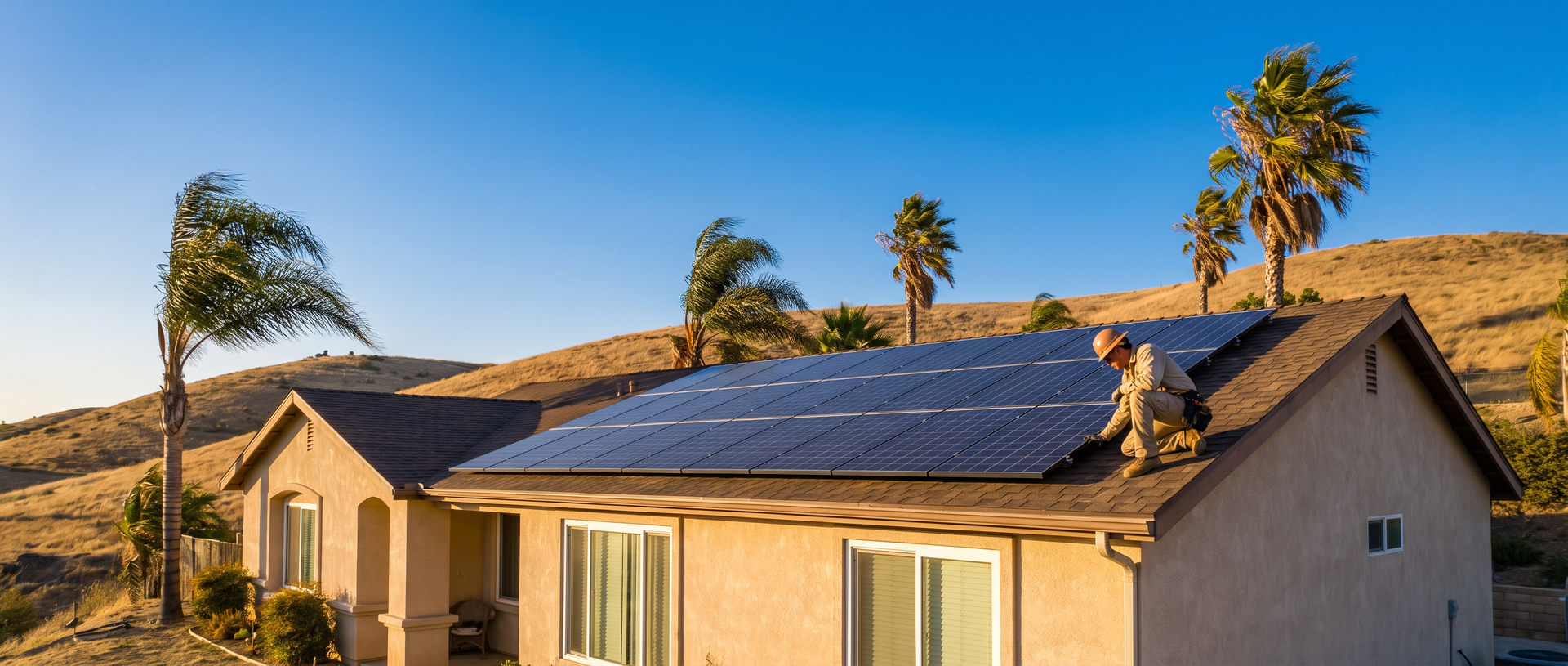
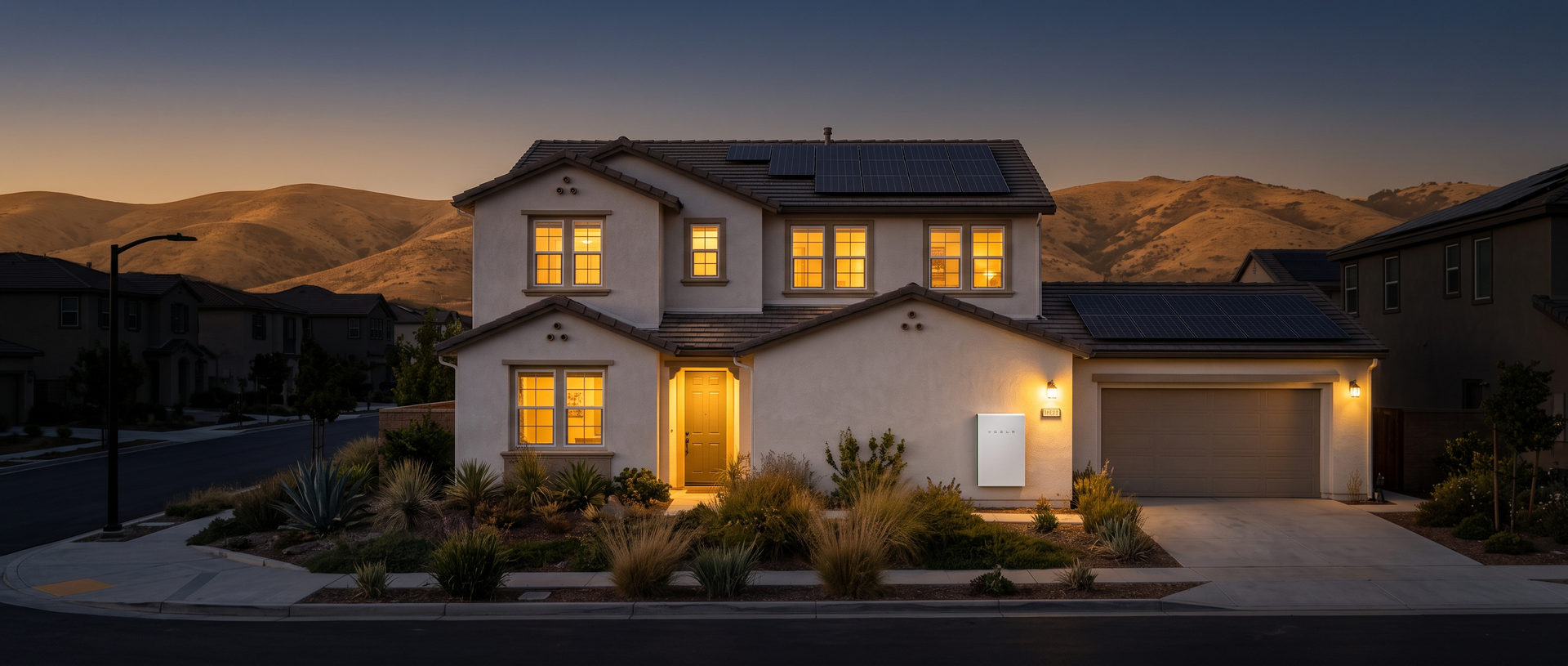
Battery storage for SDG&E peak hours comes down to one thing: timing. In Clairemont, the most expensive electricity of the day lands right when most families are home, roughly 4 p.m. to 9 p.m.
A home battery lets you store energy earlier in the day and use it during that window, instead of buying grid power at its highest price. This guide covers who benefits most, how to match a system to your routine, and what owning one actually looks like.
Three Kinds of Households Asking This Question
Most homeowners who ask about batteries fall into one of three patterns. Knowing yours makes the rest of the decision much simpler.
- The solar-already home. You might be someone who installed panels years ago and now notices that midday exports seem to do less for your bill than the power you buy back after sunset.
- The evening-heavy home. You might be someone who leaves for work in the morning and gets home as the sun drops. Cooking, laundry, cooling, and EV charging all pile into the evening.
- The backup-minded home. You might work from home and care just as much about keeping the refrigerator, Wi-Fi, and lights running during an outage as you do about the bill.
Homeowners in Chula Vista, Escondido, and Oceanside tell us versions of the same three stories. The streets change, but the patterns hold. If you want to understand the team behind the design process first, read more about Sunline Energy.
Bottom line: this helps you start from your own routine instead of a sales pitch.
Matching Battery Storage to SDG&E Peak Hours
Here's the thing. A battery works less like a generator and more like a pantry. You stock it when energy is cheap or already produced on your roof, then draw from it when prices climb.
| If You're This Homeowner | Consider This | Why It Fits |
|---|---|---|
| You have solar and export most of it midday | Adding a battery to your existing system | Stored midday production can cover more of your evening use, once compatibility is confirmed |
| You don't have solar and your home is busiest after 4 p.m. | Solar paired with battery storage | Daytime production gets saved for the hours you are actually home |
| Outages are your biggest worry | A battery with backup circuits planned in advance | Essential loads stay powered during an outage, within the system's capacity |
| Most of your use already happens midday | Solar first, with a battery as an optional later step | Your usage may already line up well with solar production |
Notice that last row. A battery isn't the right answer for every home, and an honest design conversation should say so. Your existing inverter, panel age, and main electrical panel all affect what is compatible.
You can see the full range of services, from solar and storage to roofing and EV charging, on the Sunline Energy homepage. This matters for homeowners who want the system to fit their routine, not the other way around.
What 4 to 9 p.m. Actually Looks Like on the Mesa
Picture a weekday in late September. The marine layer burned off hours ago, and the neighborhood has been warming all afternoon. You exit SR-52 or I-805 around 5:30, and the house is stuffy inside.
The AC kicks on. Someone starts dinner. The dishwasher, a load of laundry, and maybe an EV charger follow. All of it falls inside SDG&E's on-peak window, which runs from 4 p.m. to 9 p.m. on its standard time-of-use plans.
Without storage, every one of those evening loads is billed at the most expensive time of day. With a battery charged by midday solar, much of that routine can run on energy you already produced.
SDG&E also expanded its weekday super off-peak period to include 10 a.m. to 2 p.m. year-round starting in May 2026, on plans that include super off-peak pricing. Depending on your rate plan and system settings, that midday window can affect how a battery is set to charge. Rate plans change, so confirm current details directly with SDG&E.
Is a battery exciting to look at? Not really. It sits on a garage wall and stays quiet. Its value shows up as calmer evenings and fewer bill surprises, not as one dramatic moment.
Owning a Home Battery: From Permit to Year Five
Good ownership starts before installation. A careful plan looks at your roof, your main electrical panel, and exactly where the battery will live. Many homes in this part of San Diego were built decades ago, so the electrical panel often deserves a closer look.
- Site review and energy-use analysis. Your bills and routine shape the design.
- System design and compatibility check. Existing solar equipment, if any, is evaluated.
- Permitting and inspections. Work is permitted through the City of San Diego and inspected.
- SDG&E interconnection. The utility approves the system before it operates.
- Commissioning and walkthrough. You learn the monitoring app and backup settings.
Month one is mostly learning. You watch the app and see when the battery charges and discharges. By year one, most homeowners stop thinking about it much. By year five, the questions shift to software updates, monitoring, and whether your energy use has changed with a new EV or heat pump.
That long view is where ongoing Sunline Energy support comes in. This benefits homeowners who want someone to call long after installation day.
Common Questions About Battery Storage for SDG&E Peak Hours in Clairemont
Does battery storage help with SDG&E peak hours if I already have solar?
Yes, in many cases. A battery can store solar production from midday and release it during the 4 to 9 p.m. on-peak window. Compatibility with your existing inverter and panels needs to be checked first, so a site review is the right starting point for most homes.
Can a home battery run my whole house during an outage?
It depends on battery capacity and which circuits are connected. Many homeowners choose a set of essential loads, such as the refrigerator, lights, outlets, and Wi-Fi. Air conditioning and larger appliances may need more capacity. A design review clarifies what your system can realistically support.
Do I need SDG&E approval to install a home battery in Clairemont?
Yes. Grid-connected battery systems generally require permits, inspections, and utility interconnection approval before they operate. In Clairemont, that usually means working with the City of San Diego and SDG&E. Your installer should handle the paperwork and explain each step along the way.
Are there incentives for battery storage in San Diego?
Some programs may be available, but eligibility and program details change often. The former federal residential clean energy tax credit no longer applies to systems installed after 2025. Check current state and utility programs, and talk with a tax professional before counting on any incentive.
Making Peak Hours Feel Less Expensive
Battery storage for SDG&E peak hours is really about taking back control of your evenings. If your household is busiest after 4 p.m., a well-designed battery can move more of that use onto energy you stored earlier. If your evenings are quiet, solar alone may be enough.
Either way, the goal is fewer surprises and more confidence. Know a neighbor weighing the same decision? Check out the Sunline Energy referral program, or contact Sunline Energy with your questions.
Ready to Take the Next Step?
Talk with Sunline Energy about a battery storage plan designed around your home and your evening routine.