
If your solar panels need cleaning or service, the first clue usually shows up in your utility bill or your monitoring app, not on the roof itself. San Diego homeowners tend to notice it heading into fall, right as summer's dust and pollen have had months to settle and daylight hours start to shrink. Here's how to tell whether a quick cleaning will fix it, or whether it's worth calling in a technician.
Which Kind of Solar Owner Are You?
Not every homeowner relates to their solar system the same way, and that shapes how quickly a problem gets noticed.
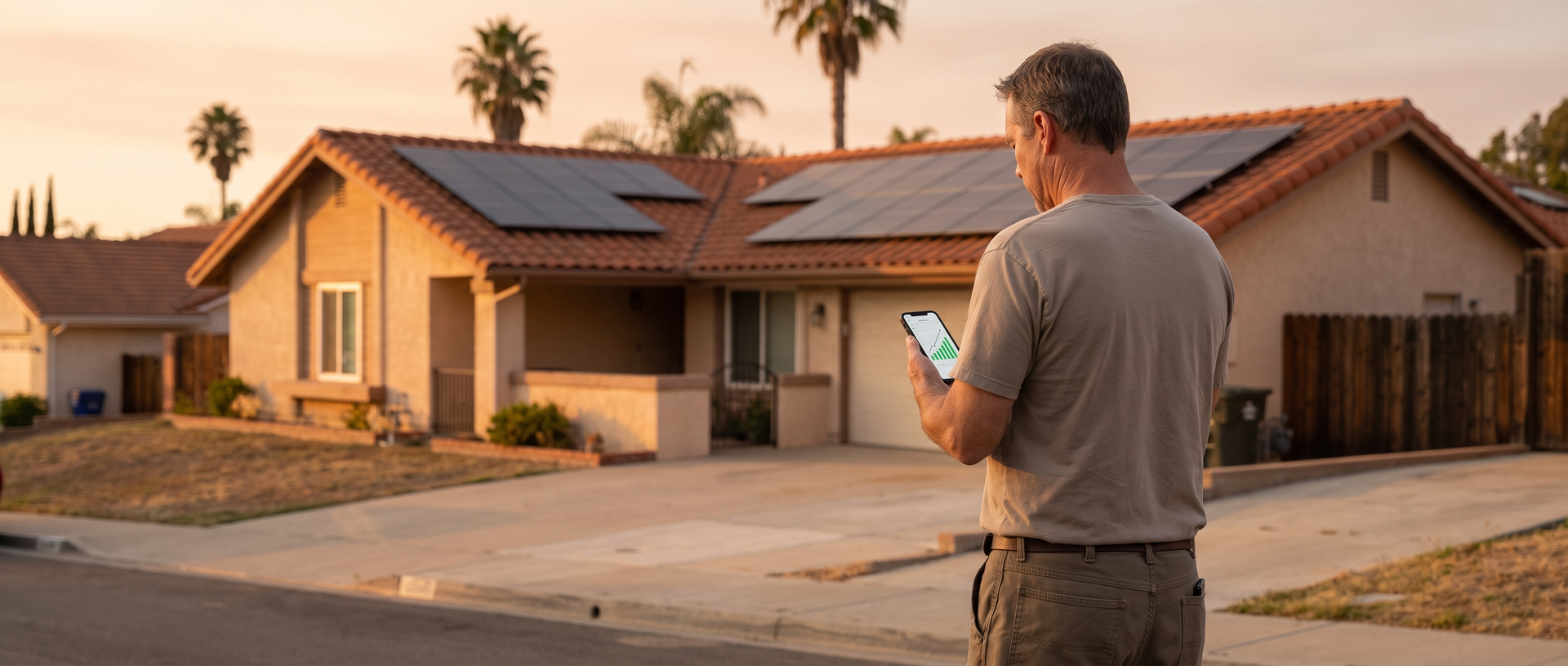
The App-Checker opens their monitoring app every week or so and catches a dip in production almost as soon as it starts, whether they're in San Diego, Chula Vista, or further inland in Escondido.
The Bill-Watcher pays less attention to daily numbers and only notices something's off when a monthly statement looks higher than expected, often a month or two after the actual drop began.
The Set-and-Forget Owner installed their system, trusted it to work, and hasn't checked anything since, sometimes for a year or more.
None of these habits is wrong. They just mean a different starting point for figuring out what's going on. You can learn more about how Sunline Energy supports homeowners after installation on our about page.
Matching the Signal to the Right Next Step
Once you know which kind of owner you are, the next question is simple: does this call for a cleaning, or does it call for an inspection? The size of the production dip, and the timing of it, usually points you in the right direction.
| If You're This Owner | Consider This | Why It Fits |
|---|---|---|
| App-Checker seeing a small, gradual dip after a windy week | Schedule a panel cleaning | Dust and pollen buildup is the most common cause of a modest drop in output |
| Bill-Watcher whose bill jumped noticeably over one or two months | Request a system inspection | A larger, sudden change is more often tied to shading, wiring, or an inverter issue than dirt alone |
| Set-and-Forget owner who hasn't checked in over a year | Book a seasonal maintenance visit | Residue builds up gradually, and a routine check catches small issues before fall and winter weather arrive |
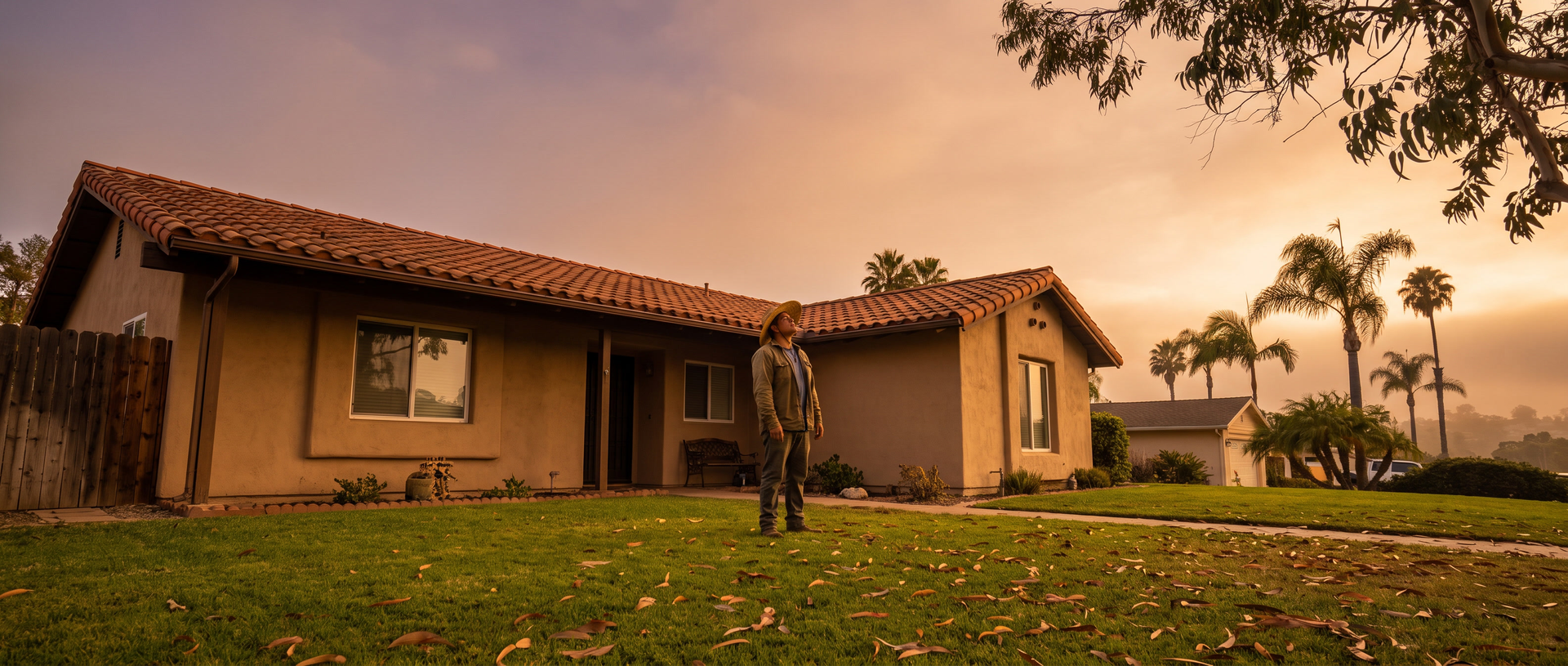
| Anyone right after a Santa Ana wind event | A visual check, likely followed by a cleaning | Wind events can deposit a visible layer of dust and debris even on panels installed within the last year |
If your situation doesn't fit neatly into one row, that's normal too. A short conversation with Sunline Energy's support team can help you figure out which path makes sense before fall's shorter days start cutting into production on their own.
What This Looks Like Around San Diego
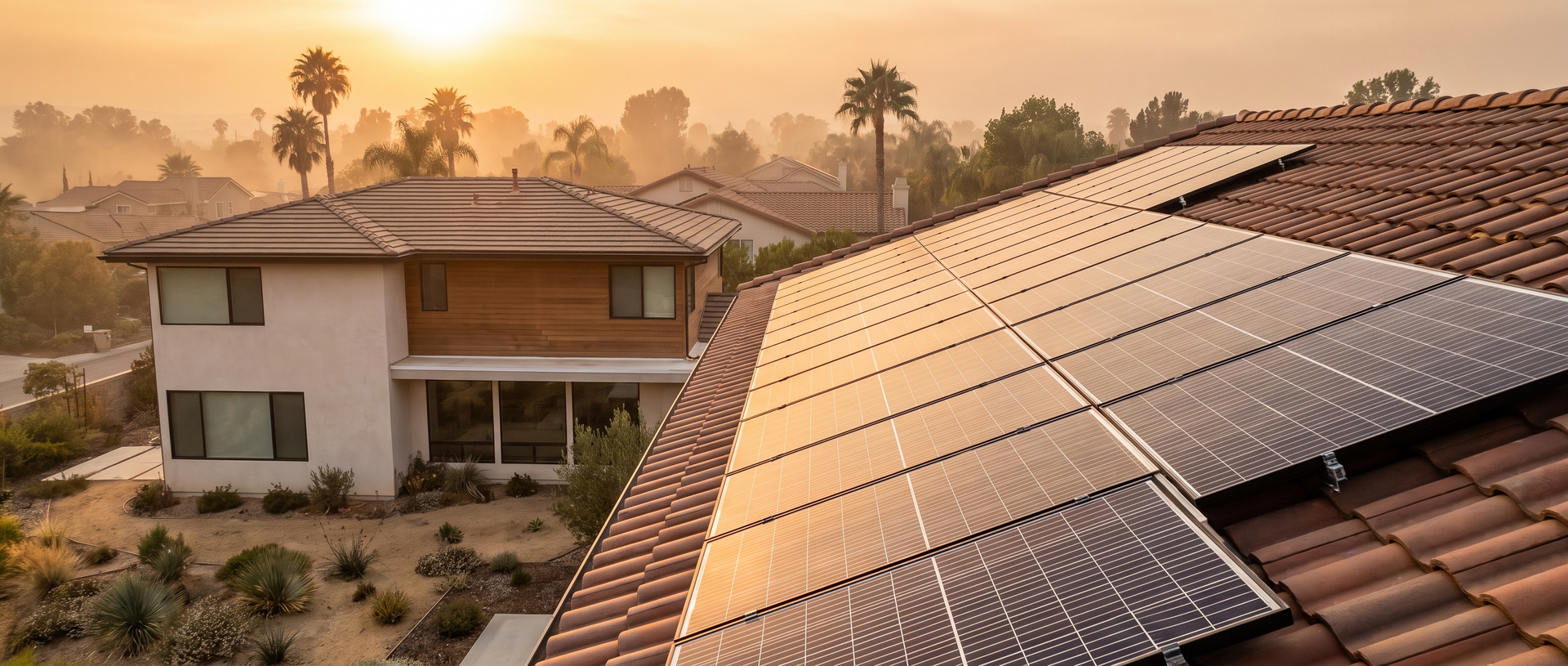
San Diego's dry stretch from late spring through early fall means panels can go months without a real rinse from rain. Closer to the coast in Oceanside and Chula Vista, marine layer moisture can leave a faint mineral film behind as it evaporates. Inland in Escondido, heat and dust tend to bake grime onto the glass a little more stubbornly.
A layer of dust that looks minor from the ground can still measurably reduce output, especially on panels set at a shallower angle that don't shed debris as easily on their own.
It's not always dirt causing the drop, though. If a tree has grown taller since installation, or a neighboring structure now casts an afternoon shadow across part of the array, cleaning won't resolve that. A technician can usually tell the difference in a single visit, which is often faster than guessing on your own.
What Happens After You Call
Most homeowners hesitate here for one of two reasons: they don't want to climb onto their own roof, or they're not sure what a service visit actually involves.
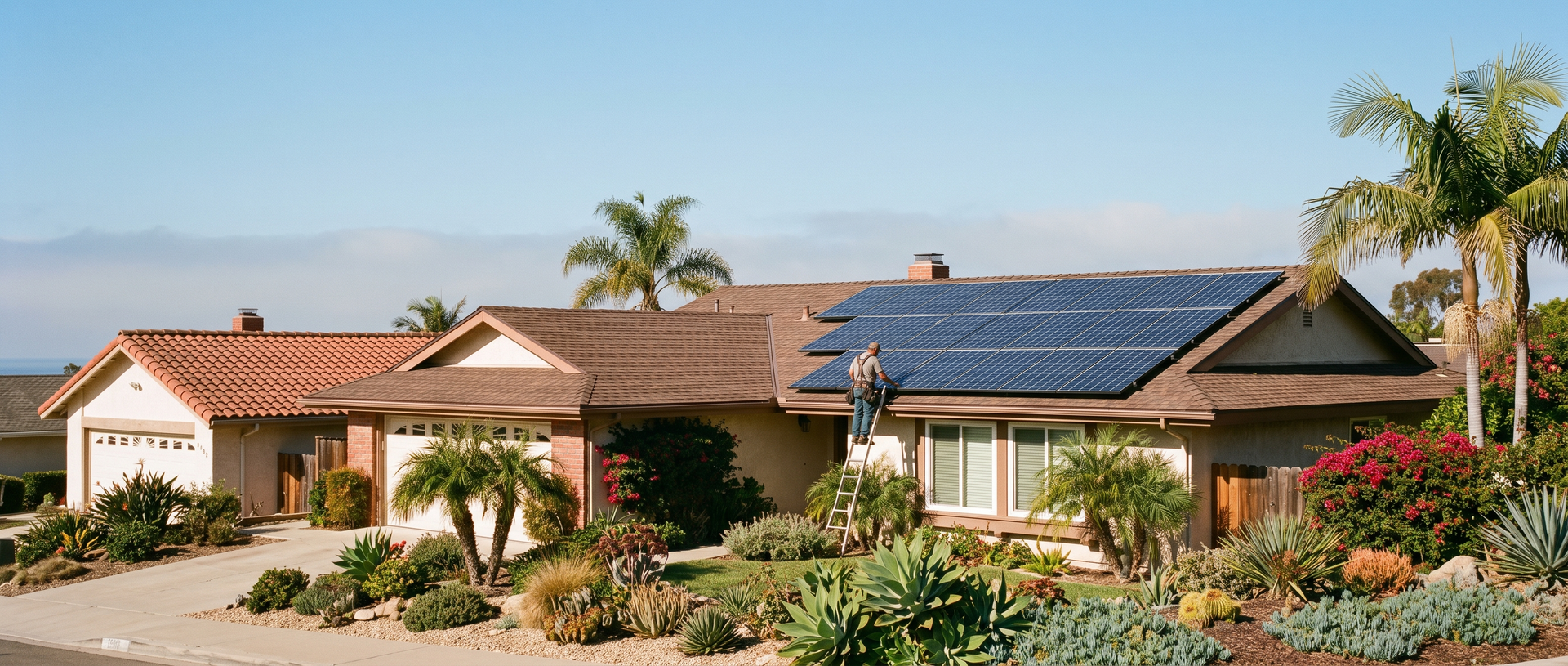
You don't need to get on the roof yourself. A technician handles the inspection and cleaning with the right equipment and safety setup, and can typically tell you on the spot whether the issue was buildup, a loose connection, or something else worth a closer look.
In the first week or so after a cleaning, many owners see their monitoring app numbers move back toward where they were before the dip. By the time the first fall rains arrive, a system that's already been checked tends to need less attention through the wetter months ahead.
If it's been a while since your last visit, Sunline Energy's referral program is also worth a look if a neighbor or friend has been asking about solar.
Common Questions About Solar Panel Cleaning and Service in San Diego
How do I know if my solar panels need cleaning?
A gradual dip in your monitoring app's production numbers, especially after a dry, windy stretch, is usually the first sign. If you can see a visible layer of dust or debris from the ground, that's a strong indicator a cleaning is due, particularly for San Diego homeowners heading into fall.
Can dirty solar panels really lower my energy savings?
Yes, a buildup of dust, pollen, or debris can measurably reduce how much sunlight reaches the panel surface. The effect is usually gradual rather than dramatic, which is why many homeowners notice it first as a slightly higher bill rather than an obvious visual change.
How often should solar panels be cleaned or serviced?
It depends on your location and the weather your system has been exposed to, so there's no single schedule that fits every home. Homeowners in dustier inland areas, or right after a Santa Ana wind event, often need to check sooner than those closer to the coast.
Should I clean my own solar panels or call a professional?
Climbing onto your own roof isn't necessary and isn't recommended without the right safety equipment. A professional can clean the panels and check for other issues, like shading or connection problems, in the same visit.
Heading Into Fall With Confidence
If your solar production has dipped and you're not sure why, the fix is often simpler than expected: a cleaning, a quick inspection, or both. Catching it now, before fall's shorter days and first rains arrive, means heading into winter with a system that's already been looked over. Visit Sunline Energy to see how a seasonal check fits into your plans, or reach out through Contact Sunline Energy if you'd rather ask a few questions first.