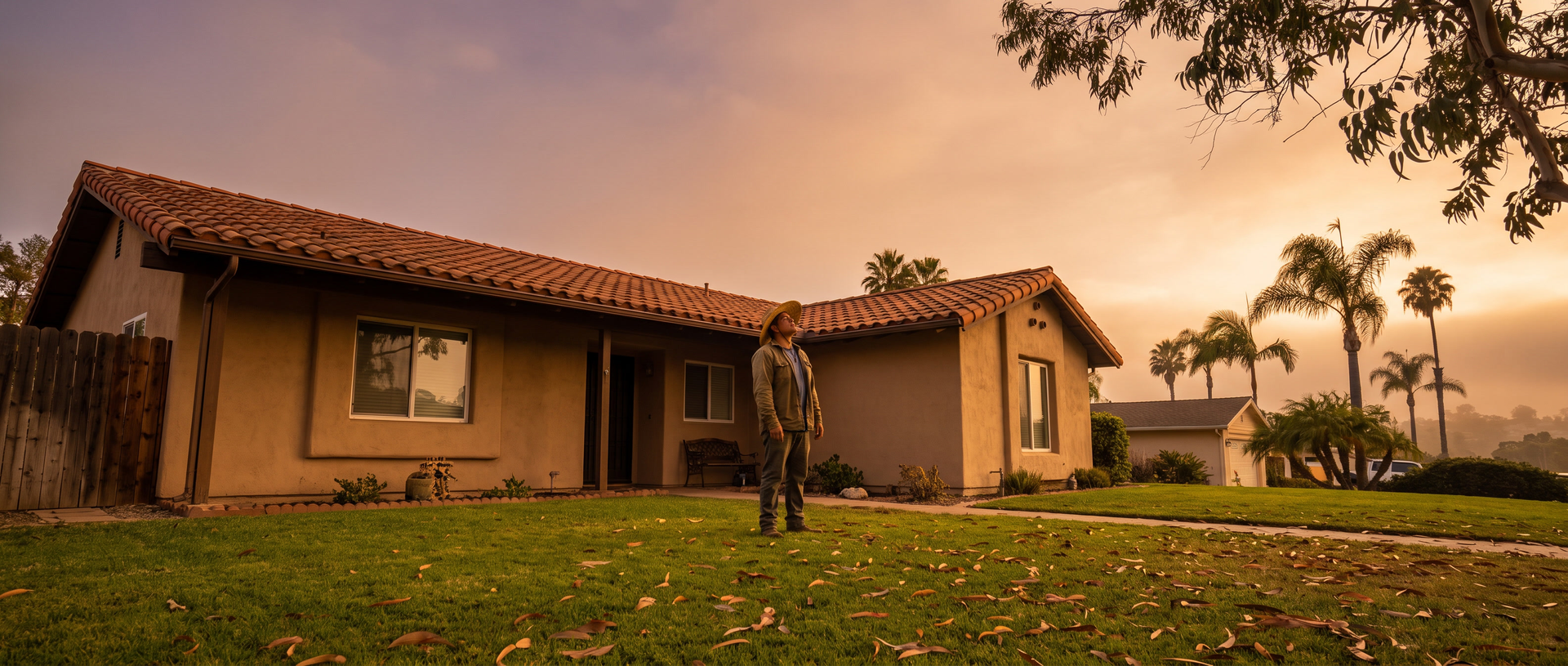

Santa Ana wind roof damage tends to show up fastest on older shingles, loose flashing, and rooftop solar mounts that haven’t been checked in a while. When these dry, gusty winds sweep through San Diego each fall and winter, they can lift, loosen, or wear down parts of a roof that look perfectly fine on a calm day.
This guide walks through what typically gets worse during Santa Ana events, and what’s worth a second look before the next round of wind moves through.
Which Kind of San Diego Roof Is Most at Risk?
Not every roof reacts to wind the same way. A few patterns tend to stand out.
- Homeowners with an older roof, especially one past the 15 year mark, that hasn’t had a post-storm look in some time.
- Homeowners who added solar more recently and aren’t sure how the mounting hardware and flashing are holding up under repeated wind.
- Homeowners on wind-exposed lots, such as canyon rims and open mesas around Escondido and Chula Vista, where gusts often hit harder than they do closer to the coast.
If any of that sounds familiar, it’s worth understanding what to look for. You can learn more about how Sunline Energy’s in-house roofing and solar team approaches this kind of work.
Matching Your Roof to the Right Kind of Check
The table below is a quick way to see where your home might fall, and what that generally calls for.
| If This Sounds Like Your Roof | What to Check | Why It Matters |
|---|---|---|
| 15+ years old, no recent inspection | Full roof and flashing inspection before wind season | Aging shingles and flashing loosen faster under repeated gusts |
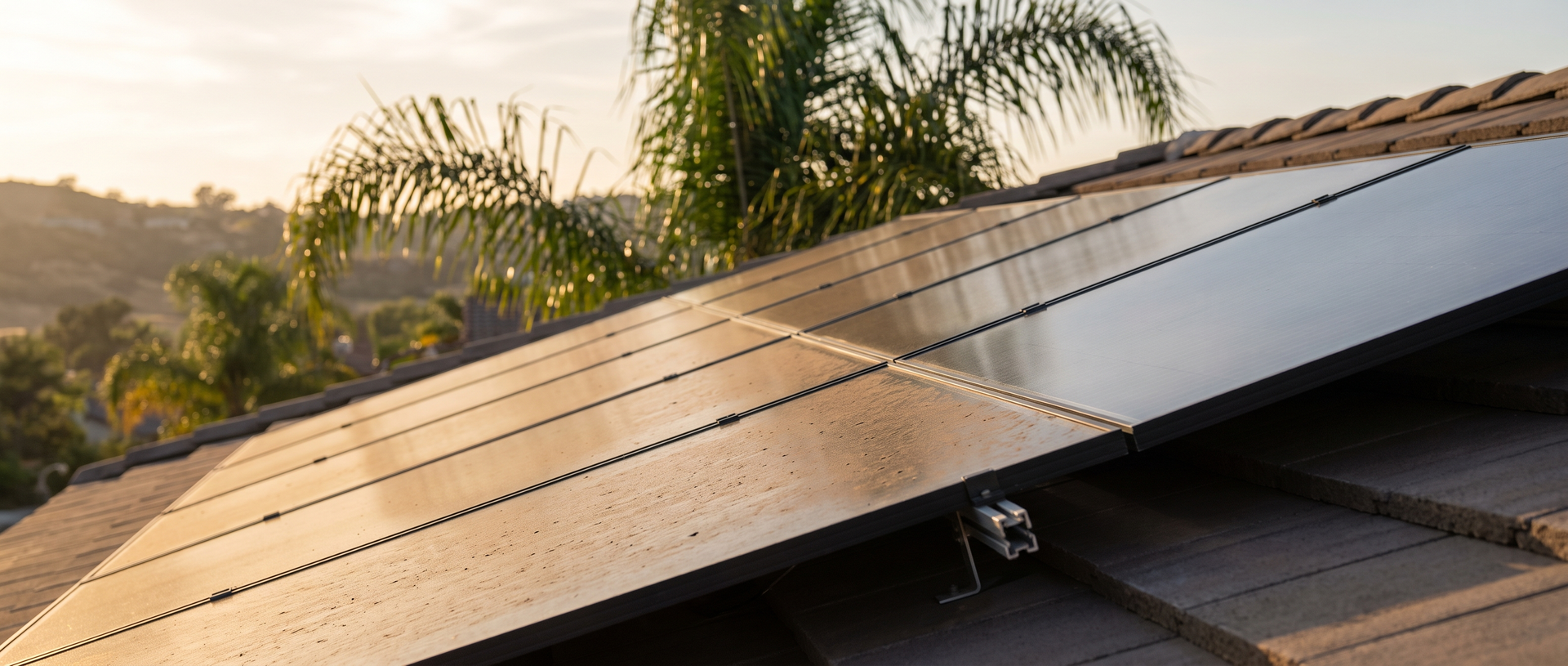
| Solar installed in the past few years | Mounting hardware and roof penetration points | Wind uplift puts extra stress where racking attaches to the roof |
| Elevated or open lot in Escondido or Chula Vista | Ridge caps, gutters, and edge shingles | Exposed, elevated homes tend to see stronger sustained gusts |
| No visible damage, but rattling at night | A professional look, even without a leak yet | Small movement now often becomes a larger repair later |
Whichever category fits, the goal is the same: catch small movement before it becomes a bigger repair. Sunline Energy works with homeowners across San Diego County on exactly this kind of preventive check.
What This Looks Like on Your Actual Roof
San Diego’s Santa Ana pattern usually runs from early fall through winter, bringing dry, offshore gusts that can climb well past normal daily wind speeds. Homes on canyon rims, mesa tops, and open lots in Escondido and Chula Vista typically feel it more than sheltered, coastal spots closer to Oceanside.
In practice, that means loose granules collecting in gutters, a shingle corner that lifts slightly at the edge, or a rattling sound from the attic during a strong gust. None of these are dramatic on their own, but they’re usually the early signal, not the final one.
It’s not the most exciting part of homeownership, but a five minute walk around the yard after a windy night, checking for debris, loose shingle pieces, or shifted vent covers, tells you a lot about whether it’s time for a closer look.
Quick takeaway: Wind damage is rarely obvious from the ground on the first pass. Debris in the yard, granules in the gutter, or new attic sounds are usually the first real clues.
What Happens If Wind Damage Goes Unchecked
During wind season, a small lifted shingle or a slightly loosened flashing seam usually doesn’t cause an immediate problem. The risk builds over the following weeks, as repeated gusts work the same weak point a little further each time.
By the time winter rain arrives, an opening that started as wind stress can turn into an active leak, water stains on a ceiling, or damage inside the attic that’s harder to trace back to its source. Addressing loose flashing or shingles beforehand is generally simpler than responding to water intrusion after the fact.
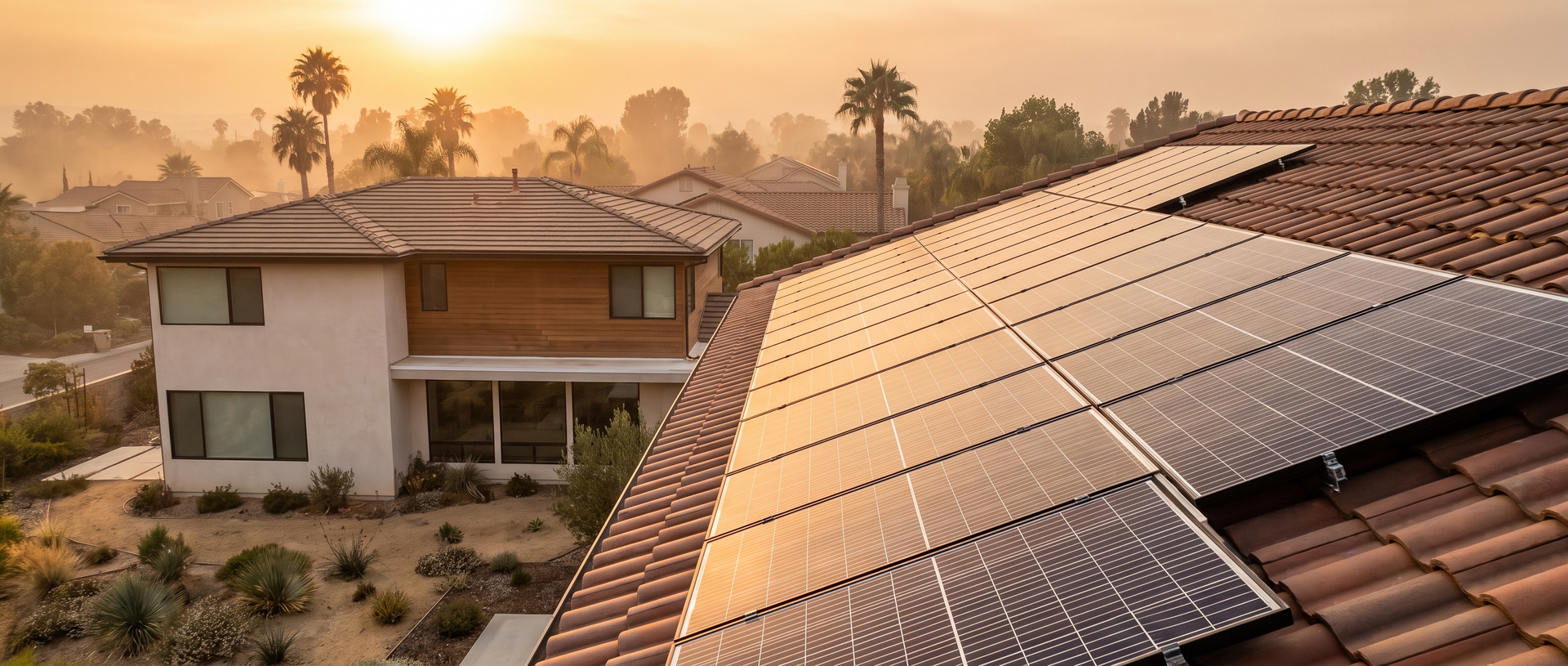
For homes with solar, the same logic applies to the roof underneath the panels. Sunline Energy’s ongoing system support covers both the roofing and solar side, so a wind-related issue doesn’t get missed just because it’s under the array.
Common Questions About Santa Ana Wind Roof Damage in San Diego
How do I know if Santa Ana winds damaged my roof in San Diego?
Look for lifted or missing shingles, granules collecting in gutters, debris around vents, and any new ceiling staining after the next rain. A ground-level check plus a quick attic look after a windy stretch usually reveals the most common signs.
Do Santa Ana winds affect rooftop solar panels too?
The panels themselves are built for wind exposure, but the flashing and mounting points where the racking meets the roof are usually the areas most likely to loosen over repeated wind events, especially on older installations.
How often should San Diego homeowners get a wind damage roof check?
A check before Santa Ana season ramps up each fall, and again after any unusually strong wind event, is a reasonable rhythm for most homes across San Diego, Chula Vista, Escondido, and Oceanside.
Can I wait until the rainy season to deal with roof wind damage?
Waiting isn’t ideal, since small openings from wind stress tend to become active leaks once winter rain arrives. Addressing loose flashing or shingles beforehand is generally simpler than responding to water intrusion later.
Peace of Mind Before the Next Wind Event
Santa Ana wind roof damage is rarely sudden. It’s usually a small, gradual weak point that gets worse with each gusty night, until it finally shows up as a leak. If you catch it early, the fix is typically straightforward, and your roof, and any solar sitting on top of it, heads into the rainy season in better shape.
Sunline Energy’s in-house team handles roofing and solar together, so a wind-related issue on either side gets the same clear communication and careful work. Check out the referral program if a neighbor could use the same peace of mind.