
"Why is my SDG&E bill so high?" is one of the most common questions San Diego homeowners ask every January. Between holiday lighting, extra guests, and cooler evenings, energy use quietly climbs from Thanksgiving through New Year's.
Sunline Energy walks through what typically drives the post-holiday spike, how SDG&E's time-of-use pricing plays into it, and the options homeowners have for making next winter's bill more predictable.
Who's Looking at This Bill?
Most people who search this question fall into one of a few groups.
The Reactive Payer just opened a bill that's noticeably higher than November's and wants to know why, fast. The Seasonal Watcher has seen this pattern before, maybe in Escondido or Chula Vista, and is trying to figure out if it's a one-time bump or the start of a longer climb. The All-Electric Household, often running a heat pump, an EV charger, or a full holiday lighting display in Oceanside or San Diego proper, already uses more electricity than a typical home and feels every rate shift more sharply.
Wherever you land, the underlying causes are usually the same. You can see the full range of what Sunline Energy helps San Diego homeowners with, from solar design to ongoing support.
Matching the Cause to the Right Fix
A higher bill after the holidays doesn't always call for the same solution. Some homeowners just need a clearer picture of what changed. Others are dealing with a pattern that repeats every winter and are ready for a longer-term fix.
| If You're This Homeowner | Consider This | Why It Fits |
|---|---|---|
| Bill jumped mainly from holiday lights and guests | A usage review before making changes | Confirms what actually drove the spike before you invest in anything |
| Bill climbs every winter, holidays or not | Solar paired with battery storage | Shifts more usage away from SDG&E's highest-priced hours |
| Running a heat pump, EV charger, or major holiday display | A system sized for your actual electric load | Matches capacity to how much power your home really uses |
| Already have solar but the bill still spiked | A system check plus battery storage | Solar without storage still pulls from the grid during evening peak hours |
If a neighbor pointed you toward Sunline Energy, our referral program page explains how that works.
What This Looks Like at Home
Winters here don't get brutal, but they don't need to. Cooler evenings mean heaters run longer, and SDG&E's time-of-use pricing means a good chunk of that usage lands in the 4 p.m. to 9 p.m. window, when rates are highest.
That single overlap, more evening heating landing inside the most expensive hours of the day, explains a lot of the post-holiday jump.
Add houseguests, a few extra loads of laundry, and holiday lighting left on well past dinner, and the numbers add up fast. Homes further inland, around Escondido, often see a sharper swing than coastal neighborhoods because nighttime temperatures drop more.
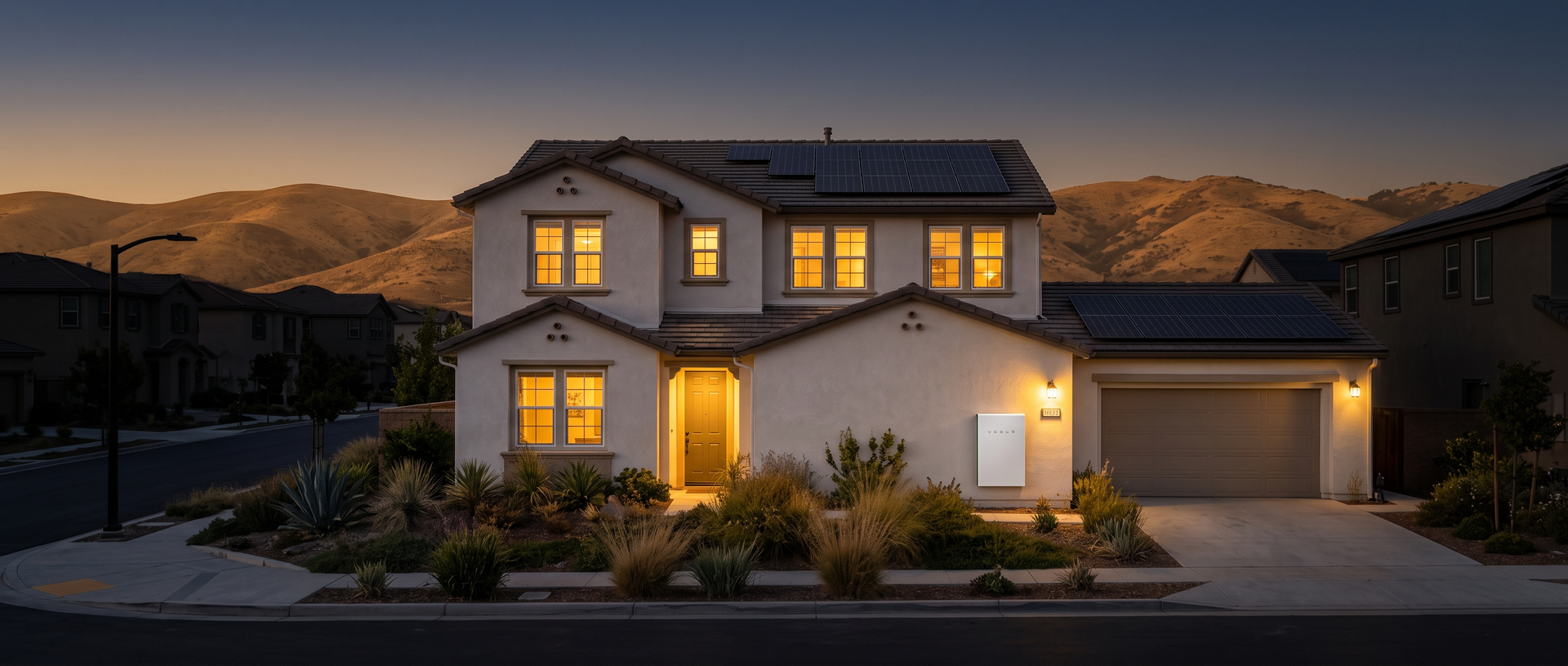
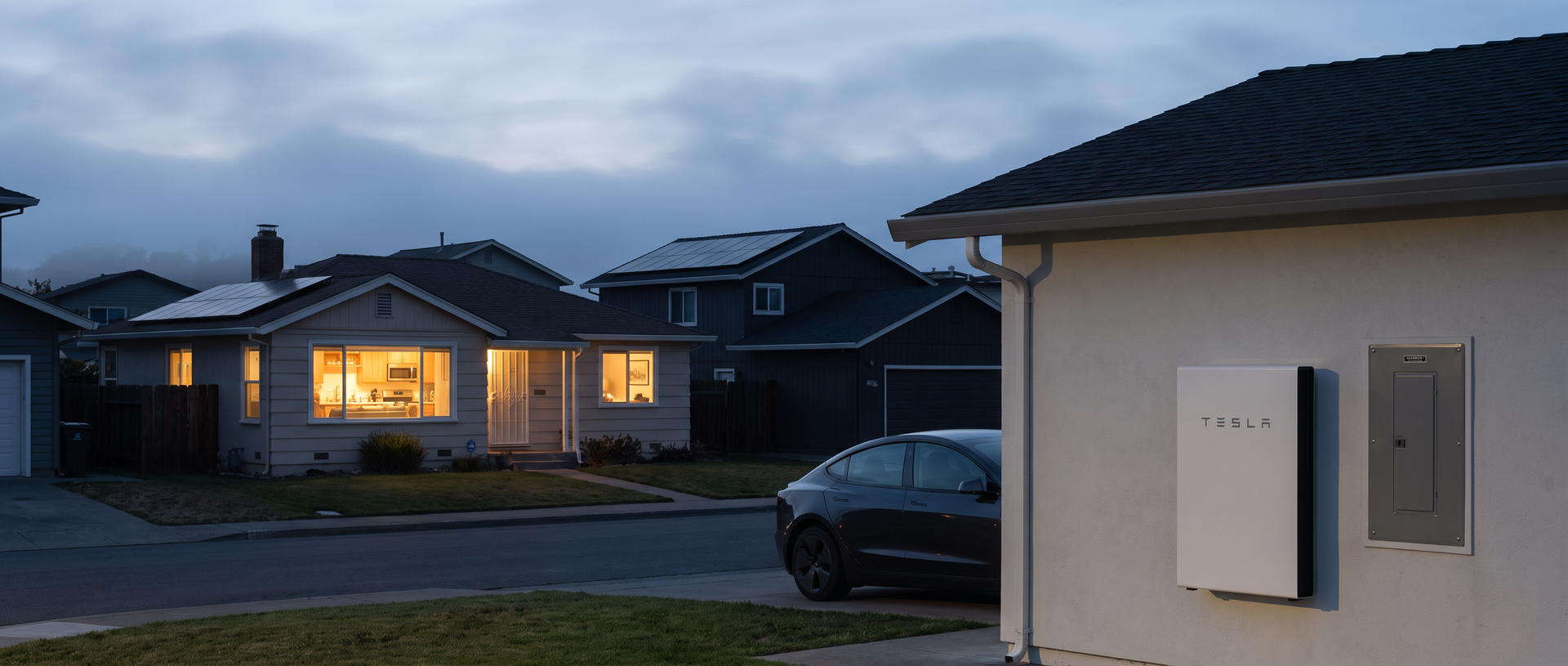
A battery charged during the day and used during that evening window can offset a meaningful share of that peak-rate usage.
It's not about running less electricity. It's about running it at a different time.
What Changes After You Address It
It's fair to wonder whether making a change is worth the effort, especially right after an unexpected bill. Here's a realistic timeline.
In month one, most of the work is upfront: a site assessment, a look at your actual usage patterns, and a system designed around your roof, your equipment, and your household's habits, not a generic package. Permitting and utility interconnection happen before anything is installed, which takes time but isn't optional.
By year one, most homeowners have a full four seasons of data to compare against past bills. By year three, the system is simply part of how the house runs, monitored and supported rather than something you think about daily.
None of this guarantees a specific outcome, and eligibility for any incentive or program should always be confirmed directly, since details can change. What it does offer is a clearer, more predictable relationship with your energy use. You can read more about our approach on the About Sunline Energy page.
Common Questions About High SDG&E Bills in San Diego
Why did my SDG&E bill spike right after the holidays?
Holiday lighting, houseguests, and more time spent at home all add usage during the same weeks that evenings get colder. Combined with SDG&E's time-of-use pricing, which charges more between 4 p.m. and 9 p.m., that extra usage often lands in the most expensive hours of the day.
Does SDG&E raise rates in winter?
SDG&E's rate structure itself doesn't change by season, but time-of-use pricing means the hours you use the most power, winter evenings, are already the higher-priced window. So the rate was always there; winter habits just line up with it more.
Can solar and battery storage lower a high SDG&E bill?
Solar paired with battery storage can reduce how much power a home pulls from SDG&E during peak evening hours, since stored daytime energy can be used instead. Results depend on system size, household usage, and current rate plan, so a personalized assessment is the best next step.
What is SDG&E time-of-use pricing and how does it affect my bill?
Time-of-use pricing charges different rates depending on when electricity is used, with late afternoon and evening typically the most expensive window. Since that's also when most San Diego households cook dinner, run heating, and host holiday guests, usage and peak pricing tend to overlap.
Bringing It Back to Your Bill
A high bill after the holidays usually isn't one thing. It's several ordinary habits landing in the same expensive hours. Once you know what's driving the spike, the fix becomes a lot more specific than "use less electricity."
If you want help reviewing what happened on your own bill, Sunline Energy's support team can walk through it with you, or you can start on the Sunline Energy home page to see the full range of services. Either way, a clearer bill next winter starts with understanding this one.